Cassileth Bio
Dr. Cassileth is chief of MSKCC’s Integrative Medicine Service and the Laurance S. Rockefeller Chair in Integrative Medicine.The program Dr. Cassileth built at MSKCC offers individual therapies in many areas, including various types of massage; mind-body therapies such as meditation, guided imagery, and self-hypnosis; creative therapies involving music and sound; acupuncture; nutrition counseling; fitness classes; education programs for patients, caregivers, and healthcare professionals; and evidence-based information on herbs, botanicals, and other products.Dr. Cassileth has continued to emphasize research, and she and her colleagues in the Integrative Medicine department serve as principal investigators for a number of ongoing trials at MSKCC, including studies of acupuncture and massage therapy.She has further promoted research of complementary therapies as founding president of the International Society for Integrative Oncology (SIO) and as a founding member of the advisory council to the National Institutes of Health Office of Alternative Medicine, now the National Center for Complementary and Alternative Medicine (NCCAM).For Dr. Cassileth, integrative medicine reflects the new era of oncology, one in which our excellent and growing survival rates permit attention to survivor needs. Physical and emotional sequelae of treatment now are important emphases.Complementary modalities can control many symptoms and enhance quality of life with safe, non-invasive, non-toxic interventions in which patients themselves can play an active role.


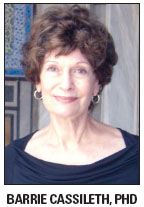
Dr. Cassileth is chief of MSKCC’s Integrative Medicine Service and the Laurance S. Rockefeller Chair in Integrative Medicine.
The program Dr. Cassileth built at MSKCC offers individual therapies in many areas, including various types of massage; mind-body therapies such as meditation, guided imagery, and self-hypnosis; creative therapies involving music and sound; acupuncture; nutrition counseling; fitness classes; education programs for patients, caregivers, and healthcare professionals; and evidence-based information on herbs, botanicals, and other products.
Dr. Cassileth has continued to emphasize research, and she and her colleagues in the Integrative Medicine department serve as principal investigators for a number of ongoing trials at MSKCC, including studies of acupuncture and massage therapy.
She has further promoted research of complementary therapies as founding president of the International Society for Integrative Oncology (SIO) and as a founding member of the advisory council to the National Institutes of Health Office of Alternative Medicine, now the National Center for Complementary and Alternative Medicine (NCCAM).
For Dr. Cassileth, integrative medicine reflects the new era of oncology, one in which our excellent and growing survival rates permit attention to survivor needs. Physical and emotional sequelae of treatment now are important emphases.
Complementary modalities can control many symptoms and enhance quality of life with safe, non-invasive, non-toxic interventions in which patients themselves can play an active role.


