Enfortumab Vedotin Combo Improves Survival in Cisplatin-Eligible MIBC
A clinically meaningful and statistically significant pathologic complete response rate advantage was seen with the enfortumab vedotin combination.


Enfortumab vedotin plus pembrolizumab received FDA approval as a treatment for patients with cisplatin-ineligible MIBC in November 2025 based on results from the phase 3 EV-303/KEYNOTE-905 trial.
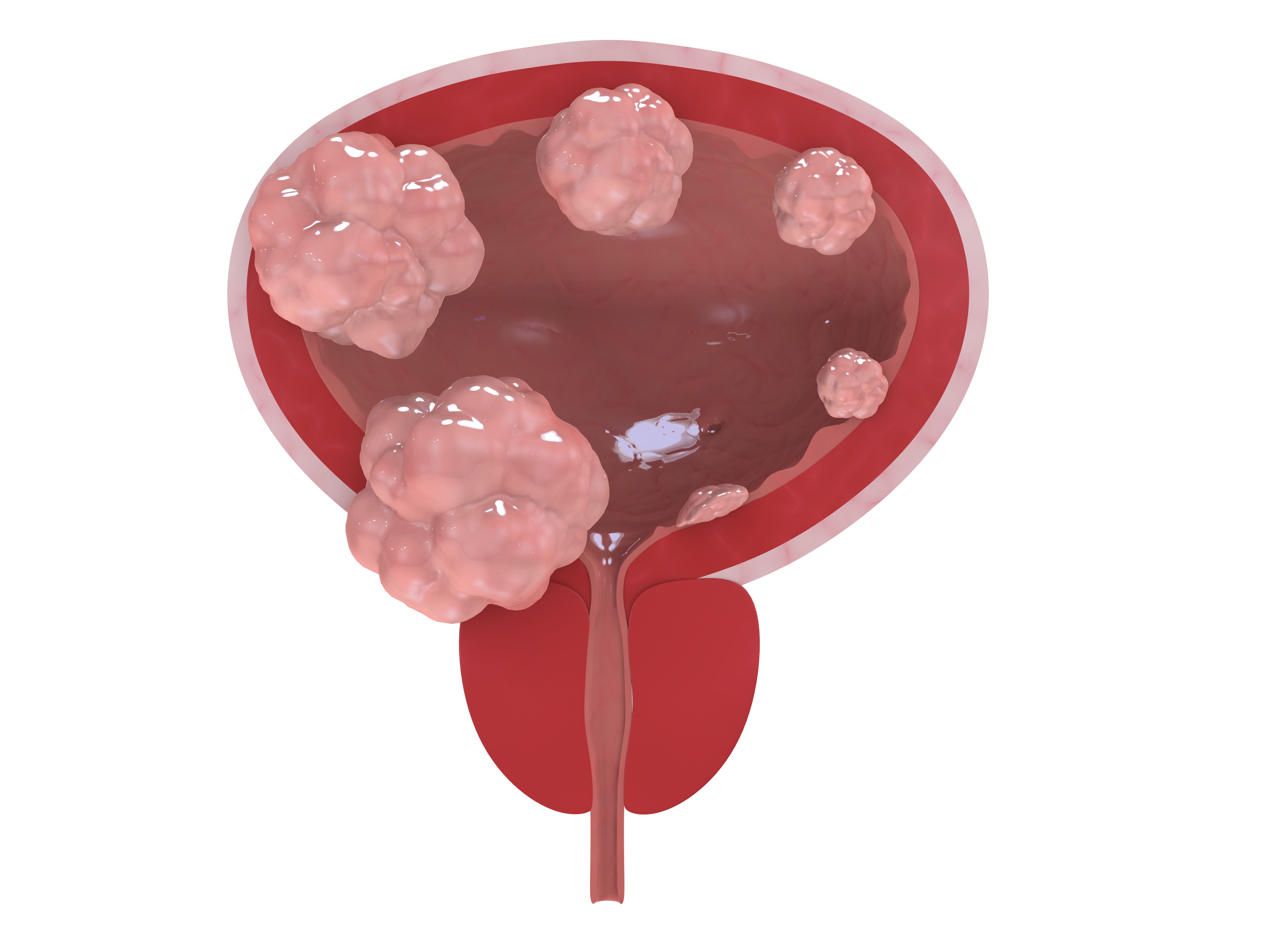
The addition of enfortumab vedotin-ejfv (Padcev) to pembrolizumab (Keytruda) as a neoadjuvant or adjuvant treatment significantly improved survival vs standard-of-care (SOC) neoadjuvant chemotherapy with gemcitabine and cisplatin among patients with cisplatin-eligible muscle-invasive bladder cancer (MIBC), according to a news release from the developer, Astellas Pharma.1
Efficacy findings from the phase 3 EV-304/KEYNOTE-B15 trial (NCT04700124) revealed that the primary end point of event-free survival (EFS) was met, with patients treated in the enfortumab vedotin arm experiencing a clinically meaningful, statistically significant improvement in EFS vs those treated with SOC chemotherapy. Additionally, the key secondary end point of overall survival (OS) was met.
Further data showed a clinically meaningful and statistically significant improvement in pathologic complete response (pCR) rate among patients treated with enfortumab vedotin/pembrolizumab vs chemotherapy. Additionally, the safety profile of enfortumab vedotin and pembrolizumab was consistent with the known profile of this regimen.
Enfortumab vedotin plus pembrolizumab received FDA approval as a treatment for patients with cisplatin-ineligible MIBC in November 2025 based on results from the phase 3 EV-303/KEYNOTE-905 trial (NCT03924895).2 Therein, a significant improvement in both median EFS (HR, 0.40; 95% CI, 0.28-0.57; P <.0001) and median OS (HR, 0.50; 95% CI, 0.33-0.74; P = .0002) was observed with the combination as neoadjuvant and adjuvant treatment vs surgery alone.
According to the developers, the results from the KEYNOTE-B15 trial examining the enfortumab vedotin combination in the cisplatin-eligible population will be submitted for presentation at an upcoming medical meeting and discussed with global health authorities for regulatory submission.
“Despite available treatment options, nearly half of patients with [MIBC] progress to metastatic disease within 3 years of diagnosis. The EV-304 results represent a key milestone in the new era of urothelial cancer treatment,” Christopher Hoimes, DO, director of the Bladder Cancer Program and Center for Cancer Immunotherapy at Duke Cancer Institute, and EV-304 principal investigator, said in the news release.1 “Together, the EV-303 and EV-304 results show that perioperative enfortumab vedotin plus pembrolizumab can positively impact the treatment journey for patients with [MIBC], offering significant survival gains across cisplatin-ineligible and cisplatin-eligible [groups], signaling a shift from conventional platinum-based chemotherapy and the potential to transform the standard of care."
The ongoing KEYNOTE-B15 trial randomly assigned patients to receive the enfortumab vedotin combination as neoadjuvant and adjuvant treatment or neoadjuvant chemotherapy. All patients underwent cystectomy, and random assignment occurred following completion of pre-operative systemic treatment.
Those in the investigational arm received 200 mg of intravenous pembrolizumab on day 1 of 3-week cycles for 4 cycles in the preoperative phase and for 13 cycles in the postoperative phase for a total treatment duration of up to 1 year.3 Enfortumab vedotin was administered intravenously at 1.25 mg/kg on days 1 and 8 of 3-week cycles for 4 cycles in the preoperative phase and 5 cycles in the postoperative phase for a maximum treatment duration of 7 months.
Gemcitabine was given at 1000 mg/m2 intravenously on day 1 and 8 of 3-week cycles for 4 cycles preoperatively. Cisplatin was also given preoperatively as a 70 mg/m2 intravenous infusion on day 1 of four 3-week cycles.
The primary end point was EFS. Secondary end points included pCR rate, OS, disease-free survival, safety, and quality of life.
Patients with histologically confirmed urothelial carcinoma or MIBC with clinically non-metastatic bladder cancer and eligibility for radical cystectomy and pelvic lymph node dissection were included in the trial. Additionally, those eligible for study enrollment had an ECOG performance status of 0 or 1 and adequate organ function.
"Building on the recent US approval for cisplatin-ineligible patients living with MIBC, these positive EV-304 findings reinforce the potential of [enfortumab vedotin] plus pembrolizumab to improve survival outcomes for a broad population of patients living with [MIBC]. Together with the EV-303 data, these results strengthen the evidence supporting this combination regimen as a treatment option for patients regardless of cisplatin eligibility,” Moitreyee Chatterjee-Kishore, PhD, MBA, head of oncology development at Astellas, concluded. 1
References
- PADCEV™ plus Keytruda® significantly improves survival for patients with muscle-invasive bladder cancer regardless of cisplatin eligibility. News release. Astellas Pharma. December 17, 2025. Accessed December 17, 2025. https://tinyurl.com/2u6cfrhs
- FDA approves pembrolizumab with enfortumab vedotin-ejfv for muscle invasive bladder cancer. News release. FDA. November 21, 2025. Accessed December 17, 2025. https://tinyurl.com/bdfhmhnk
- Perioperative enfortumab vedotin (EV) plus pembrolizumab (MK-3475) versus neoadjuvant chemotherapy for cisplatin-eligible muscle invasive bladder cancer (MIBC) (MK-3475-B15/ KEYNOTE-B15 / EV-304) (KEYNOTE-B15). ClinicalTrials.gov. Updated August 26, 2025. Accessed December 17, 2025. https://tinyurl.com/2s46p3kv


