FDA Clears Application for NUV-1511 for Advanced Solid Tumors
Plans have been put in place to launch a phase 1/2 study assessing NUV-1511 in a population of patients with advanced solid tumors.


A phase 1/2 dose escalation study, which is expected to launch in 2024, will determine the safety, tolerability, and clinical efficacy of NUV-1511 in a population diagnosed with advanced solid tumors that have progressed on or following treatment with fam-trastuzumab deruxtecan-nxki (Enhertu) and/or sacituzumab govitecan-hziy (Trodelvy).
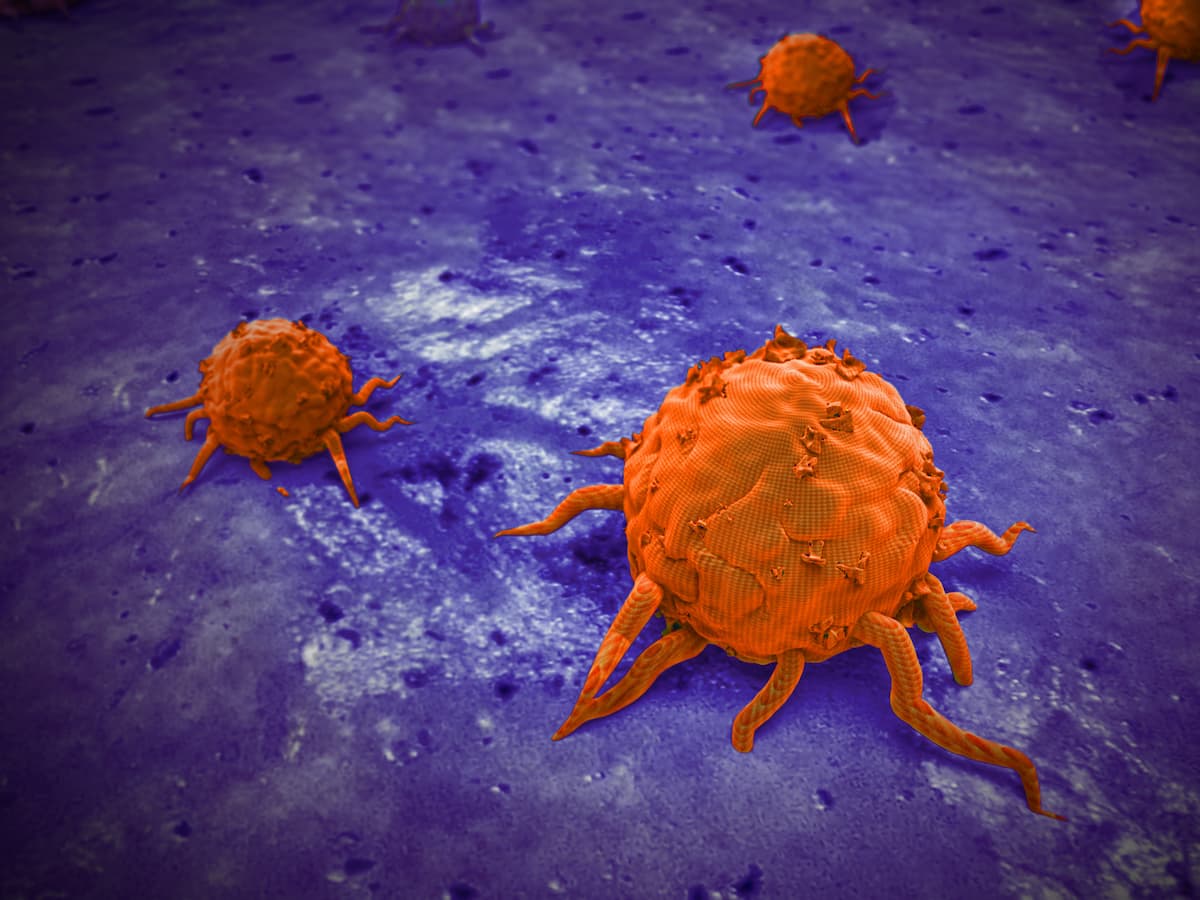
The FDA has cleared an investigational new drug (IND) application for novel drug-drug conjugate (DDC) platform NUV-1511 for the treatment of advanced solid malignancies, according to a press release from Nuvation Bio.1
A phase 1/2 dose escalation study, which is expected to launch in 2024, will determine the safety, tolerability, and clinical efficacy of NUV-1511 in a population diagnosed with advanced solid tumors that have progressed on or following treatment with fam-trastuzumab deruxtecan-nxki (Enhertu) and/or sacituzumab govitecan-hziy (Trodelvy). In particular, the study will include patients with HER2-negative metastatic breast cancer, metastatic castration-resistant prostate cancer (CRPC), pancreatic cancer, and platinum-resistant ovarian cancer.
“This IND clearance expands our clinical pipeline and validates the approach of our proprietary DDC platform to design potent oncology-focused chimeric small molecules [that] combine tumor-targeting specificity with the anti-cancer activity of known oncology agents,” David Hung, MD, founder, president, and chief executive officer at Nuvation Bio, said in the press release.1 “We believe NUV-1511 has the potential to provide favorable clinical benefit for patients with various solid tumors and we look forward to initiating the phase 1/2 study.”
The DDC platform uses a novel therapeutic approach and was designed to selectively deliver robust anti-cancer agents to cancer cells and generate greater toxicity in target tumor cells rather than healthy non-target cells.2 The platform will allow investigators to use anti-cancer therapies to conjugate tissue-selective, targeted small molecules.
Nuvation Bio also submitted an IND for a BD2 selective oral small molecule bromodomain and extra-terminal inhibitor NUV-868 for a solid tumor indication in January 2022.3 This indication included those with ovarian cancer, pancreatic cancer, metastatic CRPC, and triple-negative breast cancer.
The agent inhibits BRD4, which belongs to the BET family and is known to epigenetically regulate proteins responsible for tumor growth. NUV-868 was designed as a more selective inhibitor of BD2 rather than BD1 to limit common toxicities seen with other BRD4 inhibitors such as gastrointestinal and bone marrow adverse effects.
Although NUV-868 appeared to be more selective for BD2 vs BD1 in preclinical studies, investigators intend to assess the single agent as part of a phase 1/2 study in those with advanced solid tumors. This will be followed by a phase 2b study to further assess safety and efficacy after determining the recommended phase 2 dose, as well as a phase 2 single-agent study in those with metastatic CRPC.
“The clearance of our IND application for NUV-868 is an important milestone for Nuvation Bio as it marks the fourth IND in the last 14 months across our deep pipeline of innovative cancer therapeutics targeting multiple tumor types,” Hung said at the time of the press release.3 “We are encouraged by the selectivity and potentially improved tolerability demonstrated by NUV-868 in preclinical studies, and we look forward to advancing the program into phase 1 development in mid-2022.”
References
- Nuvation Bio announces FDA clearance of investigational new drug application for NUV-1511 for the treatment of advanced solid tumors. News release. Nuvation Bio. January 8, 2024. Accessed January 8, 2024. https://bit.ly/3tNwK7A
- Pipeline. Nuvation Bio. Accessed January 11, 2023. https://bit.ly/3HfBMNh
- Nuvation Bio announces FDA clearance of investigational new drug application for NUV-868 for the treatment of advanced solid tumors. News release. Nuvation Bio. January 20, 2022. Accessed January 11, 2024. https://bit.ly/41WbCZr
![According to John Henson, MD, “What we need are better treatments to control the [brain] tumor once it’s detected.”](/_next/image?url=https%3A%2F%2Fcdn.sanity.io%2Fimages%2F0vv8moc6%2Fcancernetwork%2Fe0d29c38bb732429ae370e4ef7d1829a10c96446-2992x1684.png%3Ffit%3Dcrop%26auto%3Dformat&w=3840&q=30 "According to John Henson, MD, “What we need are better treatments to control the [brain] tumor once it’s detected.”")


How Supportive Care Methods Can Improve Oncology Outcomes
Experts discussed supportive care and why it should be integrated into standard oncology care.


