NAPOLI-1: MM-398 Combo Shows Benefit in Metastatic Pancreatic Cancer
Combining MM-398 with 5-FU/leucovorin chemotherapy in metastatic pancreatic cancer patients resulted in improved survival compared with 5-FU/leucovorin alone.


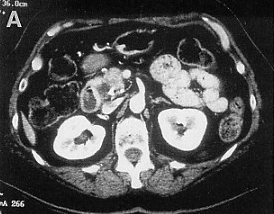
Mass in head of pancreas
Combining MM-398, a nanoliposomal encapsulation of irinotecan, with 5-fluorouracil (FU)/leucovorin chemotherapy resulted in a significant improvement in overall survival compared with 5-FU/leucovorin alone in patients with metastatic pancreatic cancer. A median overall survival of 8.9 months was achieved in patients assigned the drug combination who received 80% or greater dose intensity during the first 6 weeks of treatment.
Li-Tzong Chen, MD, of the National Institute of Cancer Research, National Health Research Institutes, Taiwan, presented results of a stratified analysis that accounted for prespecified prognostic factors included in the study randomization stratification at the 2015 ASCO Gastrointestinal Cancers Symposium. Results of the primary analysis were presented at the 2014 ESMO World Congress on Gastrointestinal Cancer.
In this phase III analysis, patients with metastatic pancreatic cancer were randomly assigned to MM-398 at 120 mg/m2 (n = 151), 5-FU/leucovorin (n = 149), or a combination of the two treatments with MM-398 given at a dose of 80 mg/m2 (n = 117).
The overall survival analysis showed an advantage for patients taking the combination MM-398 plus 5-FU/leucovorin compared with those assigned 5-FU/leucovorin alone (6.1 months vs 4.2 months; stratified hazard ratio [HR] = 0.57; P = .0009). There was no significant survival advantage for patients assigned MM-398 alone compared with 5-FU/leucovorin alone.
Patients assigned to the MM-398 combination treatment also had improved tumor response compared with the 5-FU/leucovorin–alone group. The median progression-free survival for combination patients was 3.1 months compared with 1.5 months for the patients on 5-FU/leucovorin alone (P = .0001). Significant improvements were also seen for overall response rate (P < .001) and CA 19-9 reduction (P = .0009) in patients assigned MM-398 plus 5-FU/leucovorin compared with 5-FU/leucovorin alone.
The researchers also examined the efficacy of the combination treatment in a per-protocol analysis, which included patients who received 80% or greater dose intensity during the first 6 weeks of treatment (MM-398 combination, n = 66; 5-FU/leucovorin, n = 71).
In this group of patients, the MM-398 combination resulted in a median overall survival of 8.9 months compared with 5.1 months for 5-FU/leucovorin (stratified HR = 0.47; P = .0018). Additionally, looking at those patients not included in the per-protocol analysis, the combination treatment still resulted in a significant improvement in median overall survival (4.4 months vs 2.8 months; stratified HR = 0.56; P = .0365).
The researchers were unable to identify any demographic characteristics of patients assigned to combination treatment who were more likely to have been in the per-protocol group compared with the non–per-protocol group.


