Partial-Breast Radiation Appears Effective, Safe in Early Breast Cancer
Phase 3 data affirm the use of partial-breast intensity-modulated radiotherapy as a standard of care in patients with low-risk early-stage breast cancer.


"Demonstration of the long-term efficacy of radiotherapy despite a reduction in the irradiated volume of breast tissue (without any change to dose fractionation) supports the ongoing use of partial-breast radiotherapy delivered by intensity-modulated radiation techniques in this population as a standard of care internationally," according to the study authors.
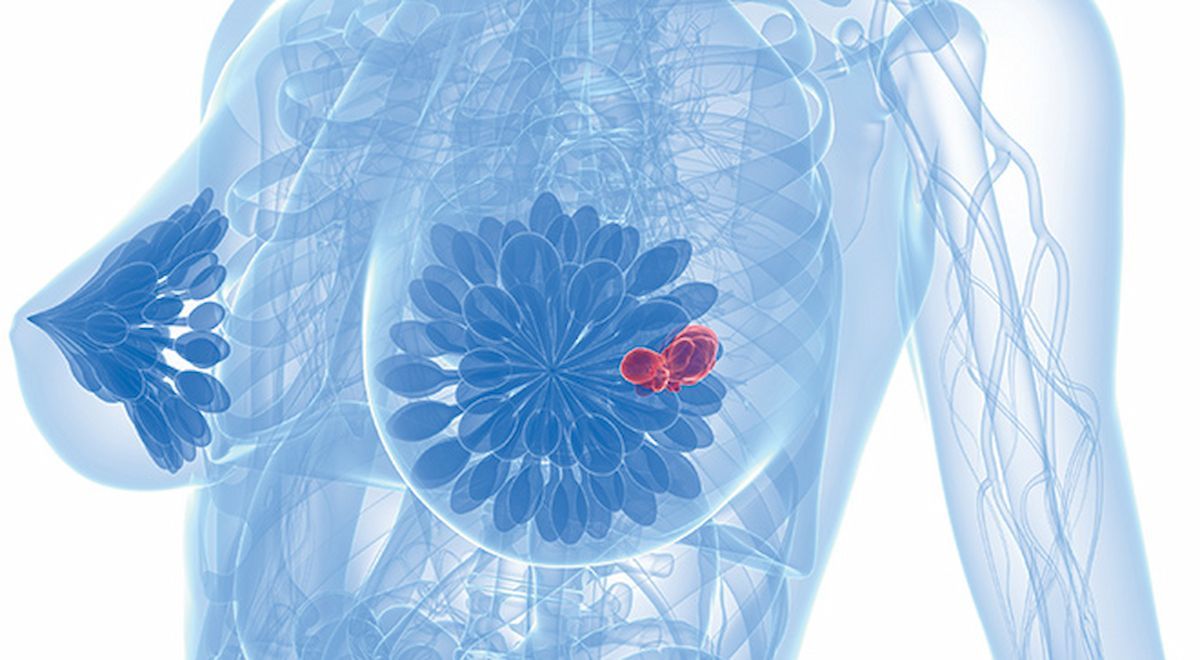
The use of partial-breast and reduced-dose radiotherapy appeared to be as safe and effective as whole-breast radiotherapy among patients with low-risk early breast cancer, according to 10-year findings from the phase 3 UK IMPORT LOW trial (NCT00814567) published in Lancet Oncology.1
Across the intention-to-treat population, the 10-year incidence of ipsilateral breast tumor recurrence (IBTR) was 2.8% (95% CI, 1.8%-4.5%) in the whole-breast radiation group, 1.9% (95% CI, 1.1%-3.5%) in the reduced-dose radiation group, and 3.0% (95% CI, 1.9%-4.8%) in the partial-breast radiation group. Compared with whole-breast radiation, data showed an estimated absolute difference in 10-year IBTR incidence of –1.02% (95% CI, –1.98% to 0.99%) for reduced-dose radiation and 0.16% (95% CI, –1.28% to 2.89%) for partial-breast radiation.
At 10 years, locoregional recurrence occurred in 3.2% (95% CI, 2.0%-5.0%) of the whole-breast radiation group, 1.9% (95% CI, 2.0%-3.5%) of the reduced-dose radiation group, and 3.5% (95% CI, 2.3%-5.4%) of the partial-breast radiation group. In each respective group, the 10-year distant recurrence rate was 3.8% (95% CI, 2.5%-5.7%), 4.1% (95% CI, 2.8%-6.1%), and 3.8% (95% CI, 2.5%-5.7%). Additionally, the respective 10-year all-cause mortality rates were 12.3% (95% CI, 10.0%-15.1%), 13.1% (95% CI, 10.7%-15.9%), and 9.8% (95% CI, 7.7%-12.4%).
“This prespecified 10-year analysis of IBTR and clinician-reported adverse effects [AEs] in patients with a lower-than-average risk of IBTR reaffirms that partial-breast and reduced-dose radiotherapy are as effective and safe as whole-breast radiotherapy in this population. [Ten]-year incidence of IBTR was no higher than 3%, and clinician-reported moderate-marked breast shrinkage occurred in less than 10% of [patients] in all groups,” lead study author Anna M. Kirby, MBBChir, MD(Res), FRCR, from the Breast Unit at Royal Marsden National Health Service Foundation Trust and the Institute of Cancer Research, wrote with coauthors in the publication.1 “Demonstration of the long-term efficacy of radiotherapy despite a reduction in the irradiated volume of breast tissue (without any change to dose fractionation) supports the ongoing use of partial-breast radiotherapy delivered by intensity-modulated radiation techniques in this population as a standard of care internationally.”
In the open-label, multicenter, noninferiority phase 3 IMPORT LOW trial, 2018 patients were randomly assigned 1:1:1 to receive whole-breast radiation at 40 Gy in 15 fractions (n = 675), reduced-dose radiation at 36 Gy in 15 fractions to the whole breast plus 40 Gy in 15 fractions to the partial breast (n = 674), or partial-breast radiation at 40 Gy in 15 fractions (n = 669).
The trial’s primary end point was the cumulative incidence of IBTR at 5 years, which investigators defined as the presence of any invasive or noninvasive carcinoma anywhere in the ipsilateral breast parenchyma or overlying skin. Secondary end points included location of local tumor recurrence, invasive IBTR, locoregional recurrence, distant recurrence-free survival, recurrence-free interval, overall survival, and other second primary cancers.
Patients 50 years or older with invasive adenocarcinoma and a tumor size pathologically determined to be 3 cm or smaller in diameter, unifocal disease, grade 1 to 3 disease, and negative axillary lymph nodes or 1 to 3 positive nodes were eligible for enrollment in the trial.2 Other eligibility criteria included having no prior malignancy apart from nonmelanoma skin cancer, no prior endocrine therapy or chemotherapy, and no concurrent chemoradiation. Patients were allowed to receive neoadjuvant endocrine therapy if the tumor was smaller than 3 cm and they fulfilled all other inclusion criteria.
The median patient age was 63 years (IQR, 58-68), with most patients having grade 2 tumors (48%). Additionally, the median follow-up was 120 months (IQR, 119-122) in the whole-breast radiation group, 121 months (IQR, 120-122) in the reduced-dose radiation group, and 120 months (IQR, 119-122) in the partial-breast radiation group.
Second primary cancers apart from breast tumors were reported in 9% of the whole-breast radiation group, 8% of the reduced-dose radiation group, and 6% of the partial-breast radiation group; the most common types of malignancies included lung, colorectal, and gynecological cancers.
Ten-year late AEs included breast shrinkage in 9% of the whole-breast radiation group, 9% of the reduced-dose radiation group, and 7% of the partial-breast radiation group. Additionally, 4, 7, and 3 patients from each group experienced rib fractures; 4, 6, and 4 had symptomatic lung fibrosis; 7, 5, and 5 had ischemic heart disease; and 16, 13, and 11 experienced persistent coughing.
References
- Kirby AM, Finneran L, Griffin CL, et al. Partial-breast radiotherapy after breast conservation surgery for women with early breast cancer (UK IMPORT LOW): ten-year outcomes from a multicentre, open-label, randomised, controlled, phase 3, non-inferiority trial. Lancet Oncol. 2025;26(7):898-910. doi:10.1016/S1470-2045(25)00194-9
- Radiation therapy in women with low risk early-stage breast cancer who have undergone breast conservation surgery (IMPORT). ClinicalTrials.gov. Updated February 27, 2019. Accessed July 2, 2025. https://tinyurl.com/46xdcwkn


