Resecting MRI-Detected Disease Doesn’t Improve Outcomes in Early-Stage BC
The 60-month local regional recurrence-free rate was 93.2% in the MRI arm vs 95.7% in the no MRI arm among patients with newly diagnosed breast cancer.


The 60-month local regional recurrence-free rate was 93.2% in the MRI arm vs 95.7% in the no MRI arm among patients with newly diagnosed breast cancer.
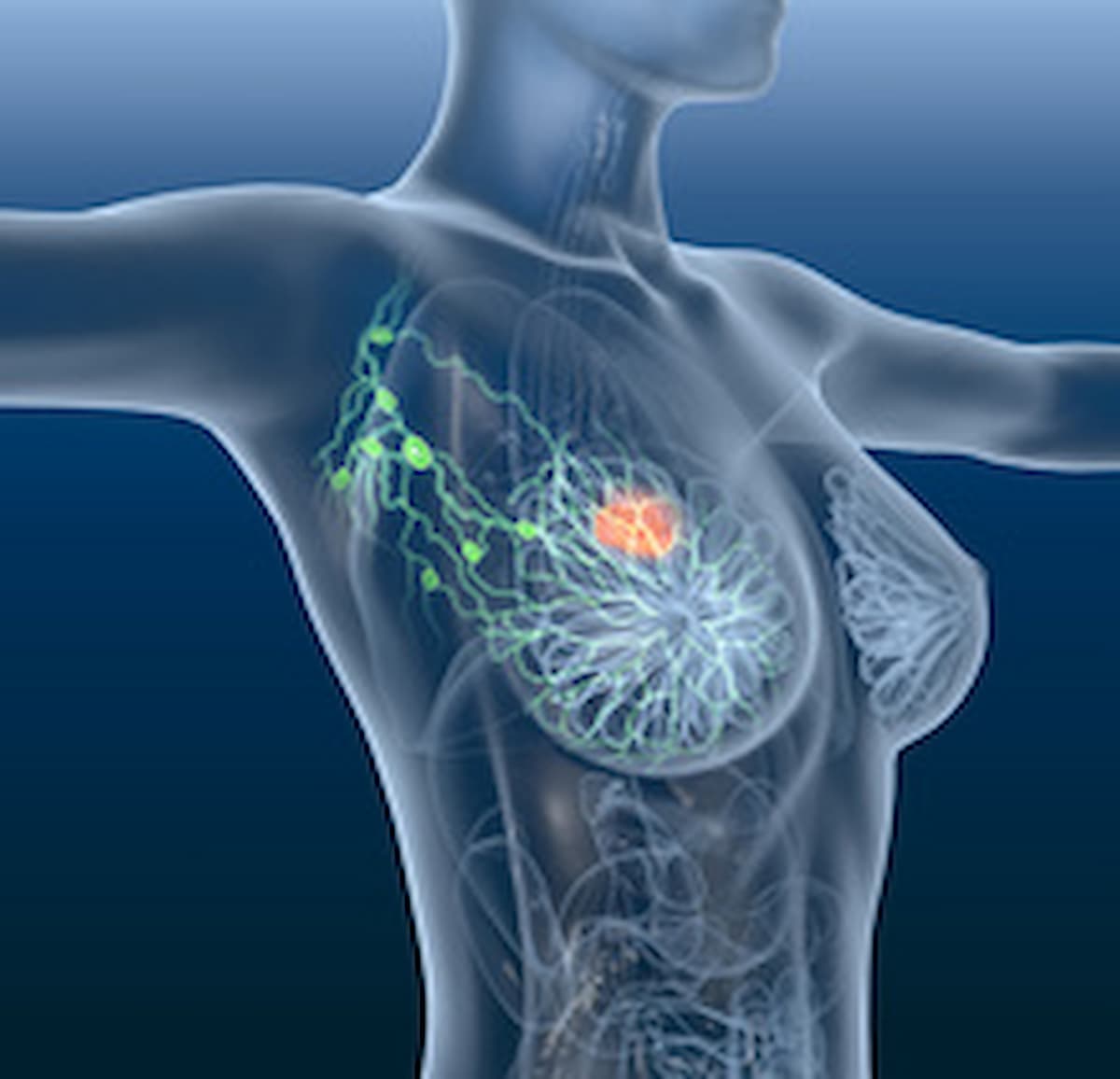
Surgical resection of MRI-detected disease may not be required in the context of systemic therapy and radiation therapy in patients with early-stage breast cancer, according to results from the phase 3 Alliance A011104/ACRIN 6694 trial (NCT01805076) shared during a press briefing at the 2025 San Antonio Breast Cancer Symposium (SABCS).
The number of patients free from local regional recurrence (LRR) at 60 months was 93.2% in the MRI arm and 95.7% in the no MRI arm; the median LRR was not evaluable (95% CI, NE-NE) in both arms, with an HR of 1.14 (95% CI, 0.33-3.90; P = .8326). Among patients younger than 50 years old, LRR events occurred in 2 of 30 patients in the MRI arm and 0 of 20 patients in the no MRI arm (P = .3312).
Additionally, of patients with estrogen receptor (ER)– or progesterone receptor (PR)–negative, HER2-positive breast cancer, LRR events occurred in 1 patient of 30 in the MRI arm and 1 of 31 in the no MRI arm, with median values of NE (95% CI, NE-NE) in both arms (HR, 1.00; 95% CI, 0.06-15.97; P = .9993). Of patients with ER/PR-negative, HER2-negative breast cancer, LRR events occurred in 9 of 117 patients in the MRI arm and 5 of 120 in the no MRI arm, with median values of NE (95% CI, NE-NE) in both arms (HR, 1.81; 95% CI, 0.61-5.40; P = .2809).
The 5-year distant recurrence-free rate (DRFR) rate was 94.3% in all patients; in the MRI arm, 8 of 147 patients experienced a distant recurrence event, and in the no MRI arm, 8 of 151 patients experienced an event. The median distant recurrence-free survival was NE (95% CI, NE-NE) in both the MRI and no MRI arms (HR, 1.01; 95% CI, 0.38-2.68; P = .9894).
The 5-year overall survival (OS) rate was 92.2% in all patients; 12 of 147 patients in the MRI arm experienced an OS event, and 13 of 151 patients in the no MRI arm experienced an OS event. The median OS was NE (95% CI, NE-NE) in both arms (HR, 0.92; 95% CI, 0.42-2.01; P = .8297).
“What we find is that the rate of LRR overall is quite low. It is lower than what we had anticipated when we were designing the study,” stated presenting study author Isabelle Bedrosian, MD, professor in the Department of Breast Surgical Oncology of the Division of Surgery at The University of Texas MD Anderson Cancer Center, during the presentation. “We identified that the preoperative breast MRI did not improve any of the oncologic outcomes that we measured—LRR, DRFR, and OS.”
A total of 319 patients were randomly assigned, in a 1:1 ratio, to receive or not receive a breast MRI. Breast MRI was administered within 30 days of mammography, and following MRI, patients underwent either breast-conserving therapy or mastectomy. All patients underwent surgery within 6 weeks of registration.
Eligible patients for the trial had newly diagnosed breast cancer of clinical stage I to II (T1 to T3N0 or T0 to 2N1) with HR-negative status and either HER2-positive or HER2-negative status. They were also eligible for breast-conserving surgery (BCS) and had no known germline BRCA1/2 alterations. Notably, there was an amendment such that patients at diagnosis did not have to be BCS eligible, but they were still required to be eligible for BCS following neoadjuvant chemotherapy.
The trial was hosted across 73 sites, of which 55% were academic and 45% were community centers.
The median age of patients was 58 years in the MRI arm and 61 years in the no MRI arm (P = .03); with clinical stage T1 noted in 70.8% and 73.4%, respectively (P = .87); clinical stage N0 in 93.8% and 93.0% (P = .79); and HER2-positive status in 19.9% and 19.6% (P = .6).
Initial breast surgery was initial BCS in 91.2% of the MRI arm and 92.7% of the no MRI arm; axillary surgery was sentinel lymph node biopsy alone in 86.4% and 94.7%, respectively; final margin status was positive in 6.8% and 6.6%; and adjuvant radiation was received by 85.0% and 85.4%.
The primary end point of this trial was the rate of LRR.
“Results from [this trial] add to the body of evidence that preoperative breast MRI for staging patients with newly diagnosed breast cancer does not result in improved oncologic outcomes or improvement in surgical care,” Bedrosian stated. “The routine use of breast MRI for staging of disease does not appear to be warranted.”
Reference
Bedrosian I, Ballman K, McCall LM, et al. Effect of preoperative breast MRI staging on local regional recurrence (LRR) in early stage breast cancer: Alliance A011104/ACRIN 6694. Presented at the 2025 San Antonio Breast Cancer Symposium; December 9-12, 2025; San Antonio, TX. Abstract GS2-07.


