The Fellow's Playbook: How to Make the Most of Your First Oncology Meeting
Third-year fellows from Weill Cornell Medicine offer 7 key tips for establishing a foundational understanding of the field at major oncology meetings.


Third-year fellows from Weill Cornell Medicine offer 7 key tips for establishing a foundational understanding of the field at major oncology meetings.
Medical Conference Forum Latest Advances in Healthcare | © Purnomo-Adobe Stock
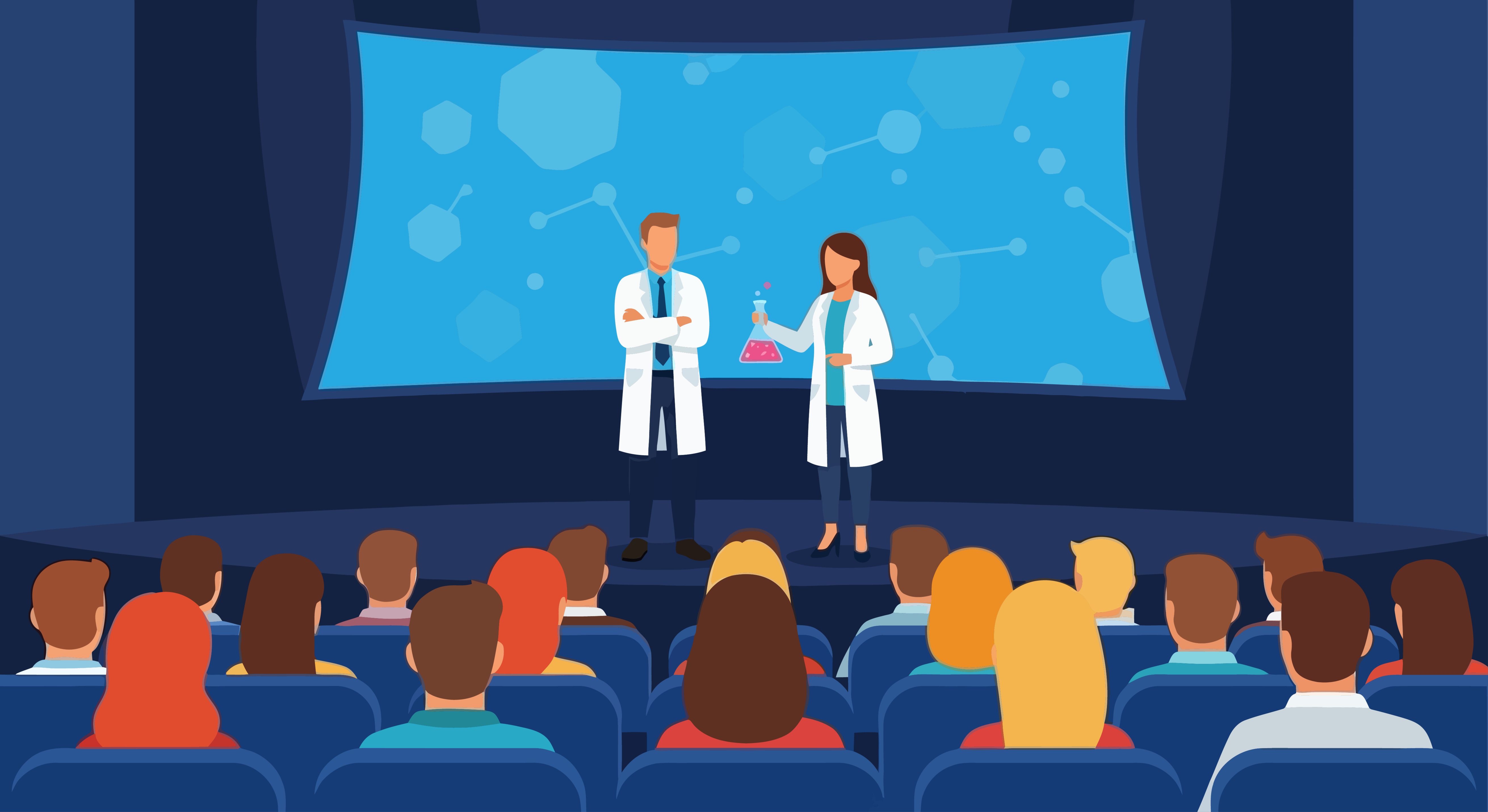
Attending a major oncology conference such as the American Society of Clinical Oncology (ASCO) Annual Meeting or the American Society of Hematology Annual Meeting & Exposition for the first time as a fellow can be exhilarating and overwhelming. The sheer volume of groundbreaking data, the simultaneous sessions, and the hundreds of thought leaders can make a new trainee feel a little insignificant.
Jonathan Lee, MD, MSc; Herman Van Besien, MD; and Theresia Akhlaghi, MD, all third-year fellows at Weill Cornell Medicine in New York, New York, met for a Career Center discussion on navigating your first medical conference as an oncology fellow.
Although you may be in the presence of key opinion leaders in your field, they urged you to remember that you are at the beginning of your journey; this is the time to learn, network, and establish a foundational understanding of the field. Approach the meeting with a plan, a sharp focus, and a willingness to connect—you will find it is a practice that builds on itself throughout your career.
1. Create Your Personalized Itinerary and Prioritize the Right Sessions
Before you leave home, download the conference app and plot out your must-see schedule. Do not try to attend everything live, as that can lead to information overload. Instead, prioritize sessions that must be seen in person, such as:
- Plenary sessions and late-breaking abstracts: These presentations are where the most impactful, practice-changing research is presented.
- Education sessions: For a junior oncologist, these are invaluable for getting a broad, expert-led summary of where the field is, providing context for the new developments.
- Hot topics/Q&A sessions: Prioritize talks where the speakers field questions from the audience, as these often provide the highest-yield learning experiences.
- Tip: You can mark concurrent educational talks to watch later as recordings, allowing you to focus on the live, highly interactive sessions.
2. Network With Intention: The Pregame Is Everything
Do not rely on chance hallway encounters; review the abstract book and attendee list, identify 3 to 5 people in your subspecialty of interest—potential mentors and future collaborators—and reach out via email or social media to request a 15-minute coffee chat during the conference.
3. Perfect Your 60-Second “Elevator Pitch”
Networking is about making a memorable connection quickly. Prepare a concise introduction of 60 seconds or less that covers who you are, what your research interest is (eg, “novel immunotherapy for GI cancers”), and what your goal is at the conference (eg, “to meet others who share my passion”). Always have business cards on hand to distribute, and write a quick note on the back of the card to jog the person’s memory later.
4. Be Visible at Poster Sessions and Trainee Events
Be present during the designated poster session viewing time, especially when moderators are scheduled. This is an excellent, low-stakes way to connect with researchers who are working in your field of interest while finding future collaborators. Additionally, take full advantage of the dedicated trainee and early-career member lounges often provided by societies such as ASCO; these spaces are designed by and for junior attendees and often host career development sessions and guided poster walks.
5. Embrace the Mindset: They’re “Just People”
It’s common to feel intimidated by senior clinicians and researchers. Remind yourself that they were once trainees and are often willing to engage with you. Approach a conversation by showing a genuine interest in their path to success and their story, rather than immediately asking, “What can this person do for me?” As one clinician noted, the best approach is to realize “they’re just people...they’re just happy to get to know other people too.”
6. Network Up, Down, and Sideways
Your network should be multidirectional:
- Up (mentors/experts): Proactively seek out faculty and thought leaders (see tip 2).
- Sideways (peers): Connect with other fellows and junior oncologists from different institutions. These are the people who will become your future colleagues, coauthors, and sources for job leads.
- Down (trainees): Engage with residents and medical students; you never know where your future institutional colleagues will come from.
7. Follow Up, Follow Up, Follow Up
Networking does not end when the conference does. Send a concise follow-up email within a few days of meeting someone. Remind them of the context of your conversation (eg, “We discussed your poster on novel chimeric antigen receptor T-cell targets...”) and any agreed-upon next steps. You should also ask for recommendations of anyone else who might be helpful along your journey, turning a cold call into a warm introduction.
To find more resources regarding the career center, visit https://www.cancernetwork.com/career-center.
![According to John Henson, MD, “What we need are better treatments to control the [brain] tumor once it’s detected.”](/_next/image?url=https%3A%2F%2Fcdn.sanity.io%2Fimages%2F0vv8moc6%2Fcancernetwork%2Fe0d29c38bb732429ae370e4ef7d1829a10c96446-2992x1684.png%3Ffit%3Dcrop%26auto%3Dformat&w=3840&q=30 "According to John Henson, MD, “What we need are better treatments to control the [brain] tumor once it’s detected.”")


How Supportive Care Methods Can Improve Oncology Outcomes
Experts discussed supportive care and why it should be integrated into standard oncology care.


