CRT Does Not Improve RFS/OS, Confers High-Grade Toxicity in Cervical Cancer
Grade 3 or 4 AEs were experienced by 42.9% of patients who received cisplatin plus radiation compared with 15.3% of patients who received radiation alone.


"NRG Oncology/GOG-263/KGOG 1008 demonstrated that weekly cisplatin-based CRT improved outcomes in terms of both RFS and OS for patients, although neither improvement was statistically significant," according to the study authors.
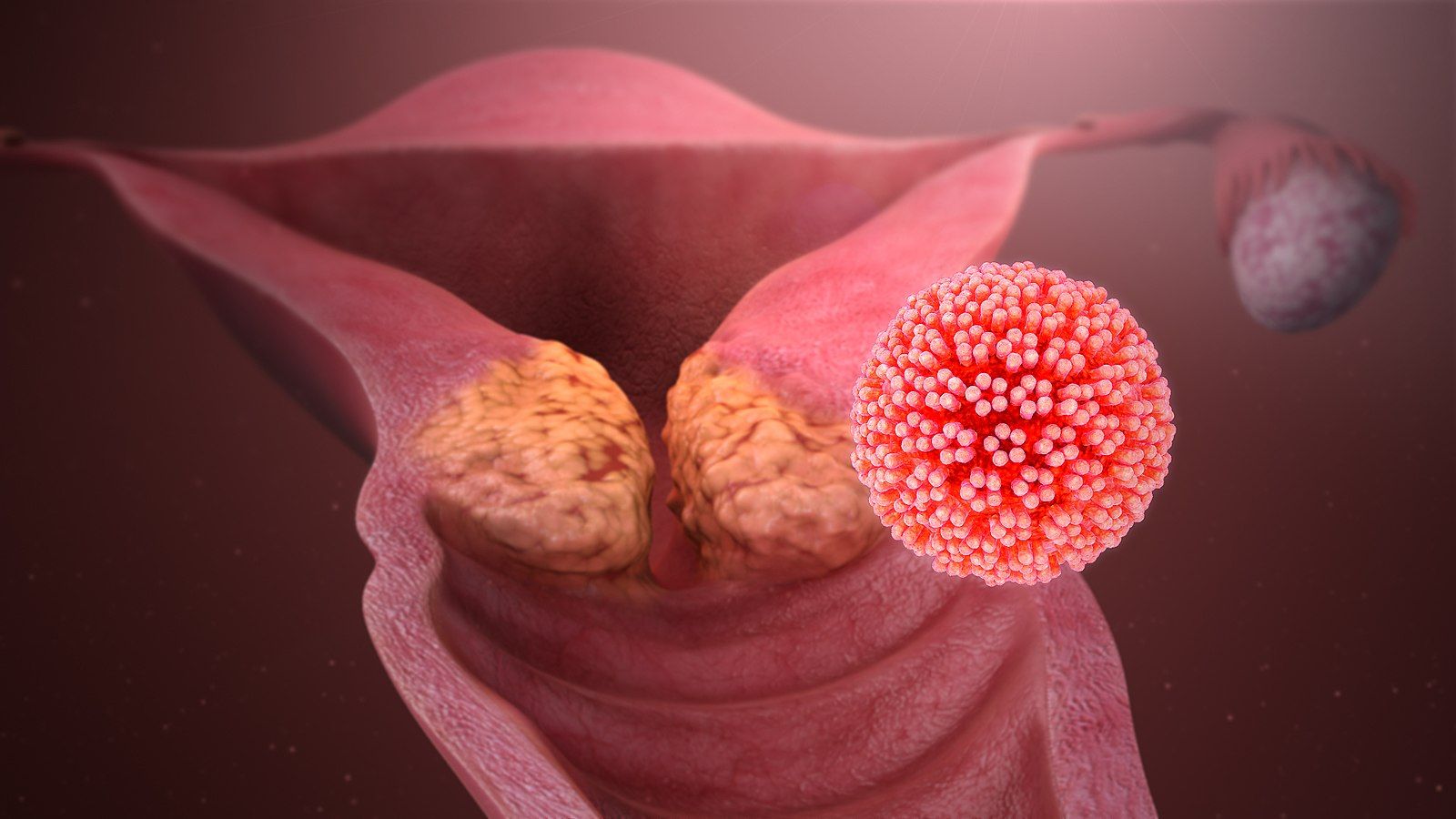
Adding cisplatin to radiation therapy (RT) did not statistically improve relapse-free survival (RFS) or overall survival (OS) while increasing the incidence of grade 3 and 4 adverse events (AEs) in patients with cervical cancer who have intermediate pathological risk factors following radical hysterectomy and lymphadenectomy, according to results from the NRG Oncology/GOG-263/KGOG 1008 phase 3 trial (NCT01101451) published in Annals of Oncology.
As of the data cutoff date of April 2, 2024, with a median follow-up of 76.5 months (IQR, 50.3-107.7), the 3-year RFS estimate for the chemoradiotherapy (CRT) arm was 88.5% (95% CI, 82%-93%) vs 85.4% (95% CI, 79%-90%) in the RT alone arm (HR, 0.698; 95% CI, 0.408-1.192; P = .09). The 3-year OS rates were 97.2% and 90.3%, respectively (HR, 0.586; 95% CI, 0.286-1.199; P = .07).
Subgroup analyses of RFS revealed that in patients treated with conformal external radiotherapy, a trend favoring CRT vs RT was observed (HR, 0.47; 95% CI, 0.24-0.92). Cox proportional hazards regression identified a potential interaction between treatment and RT modality (P = .04).
Additionally, no statistically significant outcomes were observed with CRT, although the HR point estimates for the subgroups all favored CRT except for the use of intensity-modulated RT, which favored RT (HR, 1.74; 95% CI, 0.63-4.81).
The recurrence rate was 15.8% in the CRT arm vs 12.7% in the RT arm, and no significant difference was observed based on pattern of recurrence, such as distant, loco-regional, or combined.
“NRG Oncology/GOG-263/KGOG 1008 demonstrated that weekly cisplatin-based CRT improved outcomes in terms of both RFS and OS for patients, although neither improvement was statistically significant,” wrote corresponding author and senior study coauthor Charles A. Leath III, MD, director of the Division of Gynecologic Oncology at the University of Alabama at Birmingham’s O’Neal Comprehensive Cancer Center, and coauthors. “CRT was associated with an increase in grade 3 and 4 toxicities, with a transient decrease of quality of life [QOL] as assessed by patient-reported outcomes [PROs] in [patients with] cervical cancer with intermediate risk factors following radical hysterectomy and pelvic lymphadenectomy.”
A total of 340 patients with cervical cancer were enrolled in the trial between April 2010 and April 2022, of whom 158 were assigned to receive CRT and 158 were assigned to receive RT alone. All patients started receiving adjuvant RT with external beam irradiation without brachytherapy 3 to 8 weeks postoperatively; the prescribed RT dose was 50.4 Gy in 28 fractions, with each patient given daily fractions of 1.8 to 2.0 Gy over 4.5 to 5.5 weeks.
In the RT arm, patients were given pelvic irradiation in a 4-field technique with a megavoltage beam. In the CRT arm, patients received 40 mg/m2 of cisplatin weekly, with a maximum total dose of 70 mg per week; cisplatin was typically administered on the first day of RT, approximately 4 hours before RT, and was repeated on days 8, 15, 22, 29, and 36. One hour prior to cisplatin administration, 1000 mL of normal saline was infused intravenously.
Eligible patients were 18 years or older with International Federation of Gynecology and Obstetrics stage IB to IIA cervical cancer; histologically proven squamous cell carcinoma, adeno-squamous carcinoma, or adenocarcinoma; and intermediate risk factors following radical hysterectomy and pelvic lymphadenectomy.
The primary end point of this trial was to determine whether CRT with weekly cisplatin improved RFS vs RT alone.
Regarding safety, grade 3 or 4 AEs occurred in 42.9% of patients in the CRT arm compared with 15.3% of patients in the RT arm (P < .01); more patients in the CRT arm experienced grade 3 or 4 neutropenia (P < .01), leukopenia (P < .01), and thrombocytopenia (P = .0549). No grade 5 AEs were reported during the trial.
Additionally, a decline in QOL per the Functional Assessment of Cancer Therapy-Cervix was observed after starting treatments, with patients in the CRT arm reporting worse scores in PRO assessments. The decline improved by week 36, and measured QOL outcomes were greater than baseline for both treatment arms by week 36.
“Nonetheless, with improved outcomes noted in the subset of patients based on RT techniques, future study to investigate the role of technological advancements in RT for [patients with] cervical cancer with intermediate risk factors is needed,” the authors concluded.
Reference
Ryu SY, Deng W, Albuquerque K, et al. Randomized phase III trial of adjuvant radiation versus chemoradiation in intermediate-risk, early-stage cervical cancer following radical hysterectomy and lymphadenectomy: results from NRG Oncology/GOG-263/KGOG 1008. Ann Oncol. Published online September 12, 2025. doi:10.1016/j.annonc.2025.09.003


