ENDEAVOR: Carfilzomib Doubles PFS in Relapsed Myeloma
Treatment with carfilzomib and dexamethasone doubled the PFS in relapsed multiple myeloma patients compared with treatment with bortezomib and dexamethasone.


Chemical structure of carfilzomib
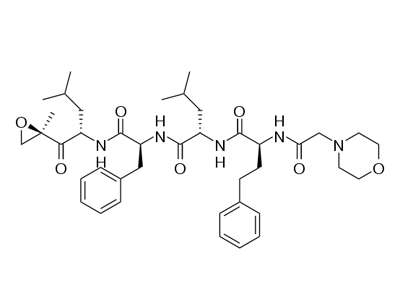
Treatment with the drug carfilzomib plus low-dose dexamethasone doubled the progression-free survival (PFS) of patients with relapsed multiple myeloma compared with treatment with bortezomib and low-dose dexamethasone, according to a press release issued by Amgen, carfilzomib’s manufacturer.
The PFS results come out of an interim analysis of the phase III head-to-head ENDEAVOR study.
The trial included 929 patients who were randomly assigned to carfilzomib/dexamethasone or bortezomib/dexamethasone. Results of this interim analysis showed that the median PFS of patients assigned carfilzomib was 18.7 months compared with 9.4 months for patients assigned bortezomib (hazard ratio [HR] = 0.53; 95% CI, 0.44-0.65).
Amgen also said that carfilzomib demonstrated superiority compared with bortezomib for the secondary endpoints of higher overall response rate and lower neuropathy events. Overall survival data are not yet mature.
In December 2014, results of the phase III ASPIRE trial were presented at the 2014 American Society of Hematology (ASH) Annual Meeting. ASPIRE showed that the addition of carfilzomib to lenalidomide and dexamethasone resulted in a prolonged PFS and better quality of life for patients with relapsed multiple myeloma. Patients given carfilzomib/lenalidomide/dexamethasone had a median PFS of 26.3 months compared with 17.6 months in the control arm (P < .0001).
In 2012, carfilzomib was given accelerated approval by the US Food and Drug Administration (FDA) for the treatment of patients with multiple myeloma who have received at least two prior therapies, including bortezomib and an immunomodulatory agent and have demonstrated disease progression on or within 60 days of the completion of the last therapy.
Amgen said that full data on the ENDEAVOR study will be submitted for presentation at the 2015 ASCO Annual Meeting.


Navigating AE Management for Cellular Therapy Across Hematologic Cancers
A panel of clinical pharmacists discussed strategies for mitigating toxicities across different multiple myeloma, lymphoma, and leukemia populations.


