Eryaspase Does Not Improve Efficacy vs Chemotherapy Alone in Advanced PDAC
The incidence and severity of AEs with eryaspase/chemotherapy was generally consistent with previous reports of chemotherapy alone in advanced PDAC.


A greater proportion of patients had attained an objective response in the eryaspase arm vs the control arm, with respective rates of 16.1% vs 12.5% and an odds ratio of 1.35.
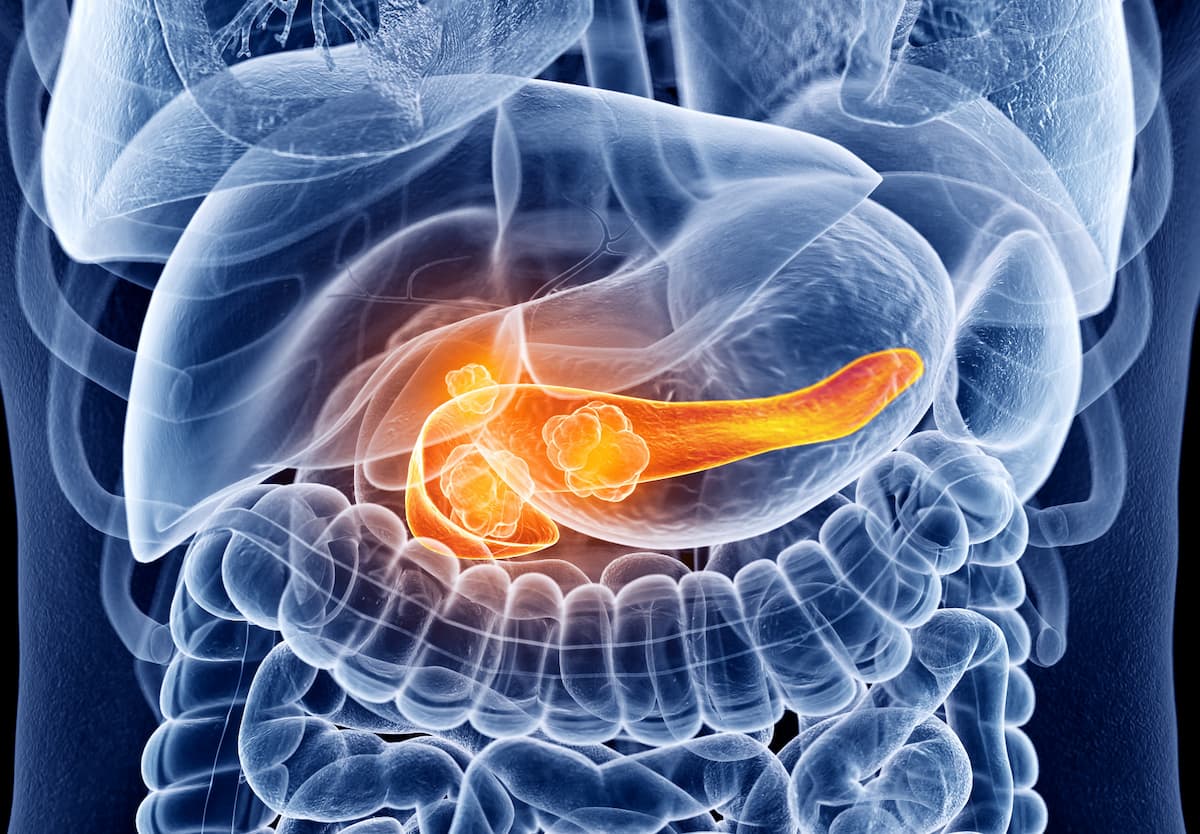
The addition of eryaspase (Graspa) to second-line chemotherapy did not exhibit an improvement in overall survival (OS), progression-free survival (PFS), or objective response rate (ORR) vs chemotherapy alone as a treatment for patients with advanced pancreatic ductal adenocarcinoma (PDAC), according to results from the phase 3 TRYBECA-1 trial (NCT03665441) published in the Journal of Clinical Oncology.
Efficacy data from the trial revealed that the median OS was 7.5 months (95% CI, 6.5-8.3) with eryaspase vs 6.7 months (95% CI, 5.4-7.5) with chemotherapy alone (HR, 0.92; 95% CI, 0.76-1.11; P = .374). According to the investigators, the study did not reach the primary end point for improved OS. Additionally, a nonsignificant difference in OS was observed with eryaspase plus irinotecan-based therapy vs irinotecan-based therapy alone, with median values of 8.0 months (95% CI, 6.2-8.9) vs 5.7 months (95% CI, 4.3-7.8), respectively (HR, 0.81; 95% CI, 0.60-1.09).
Furthermore, the investigator-assessed median PFS in the investigational and control arms was 3.7 months (95% CI, 3.4-4.1) vs 3.4 months (95% CI, 2.0-3.7), respectively (HR, 0.88; 95% CI, 0.73-1.07; P = .196). The independent radiologic (IR)–assessed median PFS was similar.
A greater proportion of patients had attained an objective response in the eryaspase arm vs the control arm, with respective rates of 16.1% (95% CI, 11.8%-21.2%) vs 12.5% (95% CI, 8.7%-17.1%) and an odds ratio (OR) of 1.35 (95% CI, 0.81-2.24). Additionally, the disease control rate (DCR) was 57.6% (95% CI, 51.3%-63.8%) vs 49.0% (95% CI, 42.8%-55.3%), respectively (P = .047). Moreover, the median duration of response (DOR) was numerically similar in both arms; 5.7 months (95% CI, 3.9-7.4) with eryaspase vs 5.8 months (95% CI, 2.8-7.4) with chemotherapy alone.
“In conclusion, TRYBECA-1 did not meet the primary [OS] end point, although there was a numerical improvement, with the addition of eryaspase to chemotherapy. The addition of eryaspase did not affect the toxicity of chemotherapy. Overall, new insights into the dysregulated metabolism and the tumor microenvironment of PDAC with more innovative therapies are urgently needed,” Pascal Hammel, MD, from Hôpital Paul Brousse in Villejuif, France, wrote in the publication with study coinvestigators. “Finally, this study provides new solid evidence for the utility and efficacy of 2 chemotherapy combinations in the [second-line] setting, which could be used for future clinical trial assumptions.”
Patients 18 years and older with histologically confirmed, unresectable, stage III and IV PDAC who experienced progression following frontline therapy, had measurable disease per RECIST v1.1 criteria, and had an ECOG performance status score of 0 to 1 were included in the trial. Those enrolled were randomly assigned 1:1 to receive chemotherapy alone or with intravenous eryaspase at 100 U/kg on days 1 and 15 of 4-week cycles.
Chemotherapy was given as investigator’s choice of gemcitabine at 1000 mg/m2 and intravenous nab-paclitaxel at 125 mg/m2 on days 1, 8, and 15; irinotecan at 180 mg/m2 intravenously plus 5-fluoroaucil at 2400 mg/m2 over a 46-hour infusion with a 400 mg/m2 bolus and 400 mg/m2 of leucovorin (FOLFIRI); or 70 mg/m2 of intravenous nanoliposomal irinotecan, 2400 mg/m2 of 5-fluoroauracil over a 46-hour infusion, and 400 mg/m2 of intravenous leucovorin. The selected regimen of chemotherapy was based on previous frontline therapy.
Between both the investigational and control arms, the median age at random assignment was 63 years (range, 32-85) vs 62.5 years (range, 30-83), and 52.5% vs 51.8% of patients were male. Most patients were White (92.2% vs 96.5%), based in Europe (92.5% vs 92.2%), and had an ECOG performance status of 1 (58.0% vs 59.1%). The most common stage at diagnosis was stage IV (58.8% vs 57.6%).
The median time from diagnosis of advanced disease to random assignment was 9 months (range, 1-53) vs 9 months (range, 0-63) in each respective arm, with 69.0% vs 71.2% of patients assigned at least 6 months removed from diagnosis. A total of 31.8% vs 35.4% received prior surgery, 14.9% vs 14.8% received prior radiotherapy, and 18.0% vs 17.9% had received at least 2 prior lines of therapy. Most patients had received prior irinotecan-based chemotherapy (60.0% vs 56.8%).
The primary end point of the study was OS in the intent-to-treat (ITT) population. Secondary end points included PFS, ORR, DCR, and DOR in the ITT population.
Almost all patients in both arms experienced treatment-emergent adverse effects (TEAEs), the most common of which included asthenia (75.4% vs 70.7%), diarrhea (55.6% vs 45.5%), anemia (51.6% vs 40.7%), and neutropenia (44.4% vs 39.4%). The most frequent grade 3 or 4 TEAEs included neutropenia (25.4% vs 20.3%), asthenia (16.9% vs 13.8%), and anemia (17.3% vs 12.2%).
A total of 5.6% vs 3.7% of patients in the investigational and control arms experienced fatal TEAEs, and 1.6% vs 0.8% were deemed attributable to study treatment. Additionally, the dose reduction and discontinuation rates due to AEs were 39.5% vs 38.6% and 18.5% vs 16.7%.
Reference
Hammel P, Metges J-P, Mercade TM, et al. TRYBECA-1: a randomized phase III study of eryaspase combined with chemotherapy versus chemotherapy as second-line treatment in patients with advanced pancreatic adenocarcinoma. J Clin Oncol. Published November 4, 2025. doi:10.1200/JCO-25-00872


