FDA OKs Phase 3 Cadonilimab/Chemo Trial in HER2-Negative Gastric Cancer
The COMPASSION-37 study is the second international registrational study for cadonilimab following an ongoing trial in hepatocellular carcinoma.


Previously, in September 2024, cadonilimab plus chemotherapy received approval in China as a frontline therapy for patients with gastric cancer based on data from the phase 3 COMPASSION-15 trial (NCT05008783).
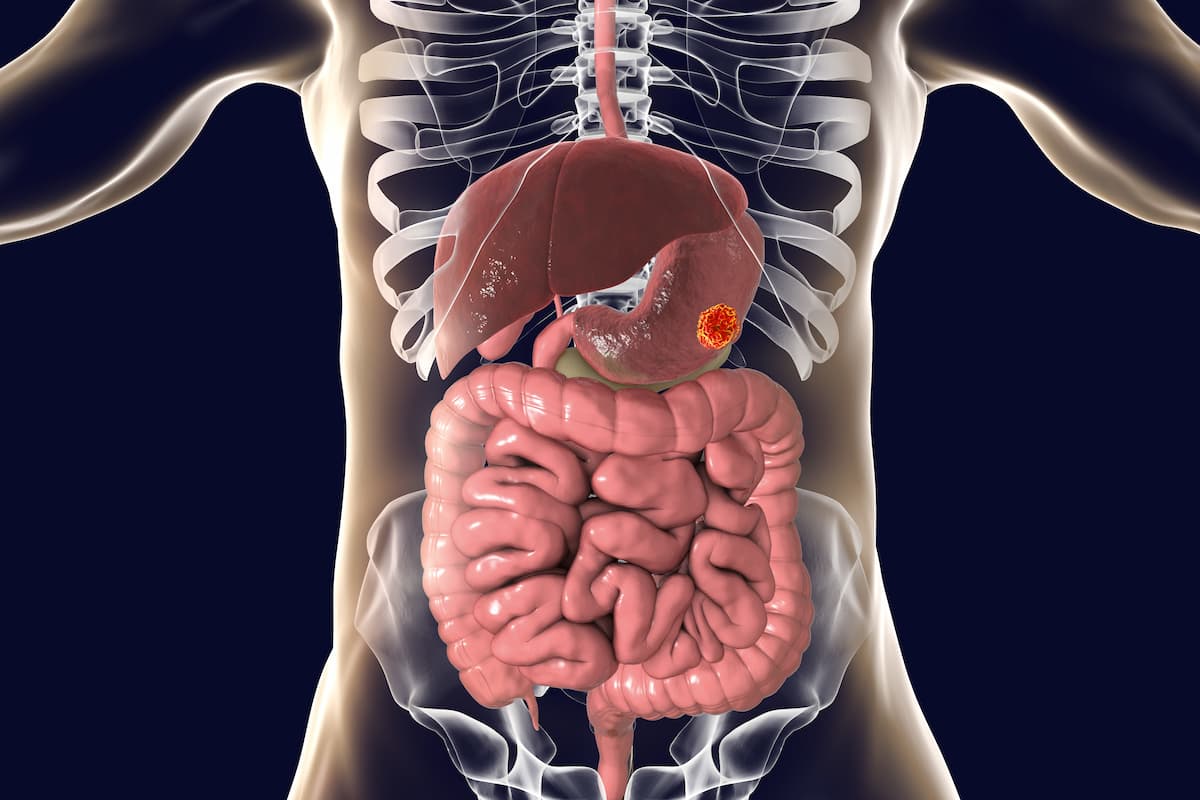
The FDA has approved the initiation of the international, multicenter phase 3 COMPASSION-37/AK104-311 trial assessing the PD-1/CTLA-4 bispecific antibody cadonilimab plus chemotherapy vs chemotherapy with or without nivolumab (Opdivo) among patients with frontline, HER2-negative, unresectable or metastatic gastric or gastroesophageal junction (GEJ) adenocarcinoma, according to a press release from the developer, Akeso.1
The launch of the COMPASSION-37 study will mark the second international registrational study assessing cadonilimab following an ongoing trial evaluating the agent in immunotherapy-resistant hepatocellular carcinoma.
Previously, in September 2024, cadonilimab plus chemotherapy received approval in China as a frontline therapy for patients with gastric cancer based on data from the phase 3 COMPASSION-15 trial (NCT05008783).2 According to the press release, COMPASSION-15 is the only international phase 3 trial to exhibit a survival benefit across all frontline advanced gastric cancer populations regardless of PD-L1 expression status.
Data presented at the European Society for Medical Oncology (ESMO) Congress 2025 showed that, across the intent-to-treat (ITT) population, the median overall survival (OS) was 13.9 months (95% CI, 12.0-16.8) with cadonilimab/chemotherapy vs 11.1 months (95% CI, 10.2-12.2) with placebo/chemotherapy (HR, 0.61; 0.51-0.73; P <.001).3 In each respective arm, the median OS was 16.8 months (95% CI, 11.3-25.1) vs 10.8 months (95% CI, 9.0-12.9) among patients with a PD-L1 combined positive score (CPS) of at least 5 (HR, 0.49; 95% CI, 0.36-0.65; P <.001) and 13.2 months (95% CI, 11.2-15.6) vs 11.3 months (95% CI, 10.1-13.0) among those with a PD-L1 CPS of less than 5 (HR, 0.76; 95% CI, 0.59-0.99; P = .019).
Across the ITT population, the median progression-free survival (PFS) was 7.0 months (95% CI, 6.7-8.4) in the cadonilimab arm and 5.3 months (95% CI, 4.5-5.6) in the placebo arm (HR, 0.51; 95% CI, 0.42-0.62; P <.001). Additionally, the median PFS was 7.0 months (95% CI, 5.6-10.5) vs 5.5 months (95% CI, 4.5-5.8) in the PD-L1 CPS of 5 or higher population (HR, 0.46; 95% CI, 0.34-0.63; P <.001) and 6.9 months (95% CI, 5.7-8.5) vs 4.6 months (95% CI, 4.3-5.6) in the PD-L1 CPS of less than 5 population (HR, 0.61; 95% CI, 0.46-0.80; P <.001).
“The efficacy and safety results in the final analysis demonstrated the long-term OS benefits of cadonilimab plus chemotherapy and will further strengthen its leading position as a standard of care in [frontline] treatment for [gastric] or GEJ adenocarcinoma,” lead study author Lin Shen, MD, of the Department of Gastrointestinal Oncology at Beijing Cancer Hospital, wrote with coauthors in the presentation.2
In the phase 3 COMPASSION-15 trial, 610 patients with previously untreated, locally advanced, unresectable or metastatic gastric or GEJ adenocarcinoma were assigned to receive cadonilimab at 10 mg/kg every 3 weeks (n = 305) or matched placebo (n = 305) in combination with chemotherapy for a maximum of 6 cycles. All patients received capecitabine at 1000 mg/m2 orally twice daily on days 1 to 14 every 3 weeks and oxaliplatin at 130 mg/m2 intravenously every 3 weeks. Afterwards, patients received maintenance with cadonilimab or placebo.
The trial’s primary end point was OS in the ITT population. Secondary end points included PFS, objective response rate, duration of response, disease control rate, safety, and health-related quality of life.
Safety findings revealed that 99.0% of patients in the cadonilimab arm and 97.4% of the placebo arm experienced treatment-related adverse effects (TRAEs) of any grade, with 66.9% and 53.6%, respectively, having grade 3 or higher toxicities. The most common grade 3 or higher TRAEs occurring in more than 5% of each arm included decreased platelet counts, decreased neutrophil counts, anemia, decreased white blood cell counts, and hypokalemia.
References
- Cadonilimab (PD-1/CTLA-4) receives FDA clearance for global phase III first-line gastric cancer trial versus nivolumab. News release. Akeso. December 11, 2025. Accessed December 12, 2025. https://tinyurl.com/5bjdwefk
- Akeso's cadonilimab receives second indication approval from NMPA for first-line treatment of gastric/GEJ cancer in all-comers population. News release. Akeso. September 30, 2024. Accessed December 12, 2025. https://tinyurl.com/43rkc29h
- Shen L, Zhang Y, Li Z, et al. Cadonilimab (Cado) plus chemotherapy (chemo) versus chemotherapy as first-line (1L) treatment for advanced gastric or gastroesophageal junction (G/GEJ) adenocarcinoma: final results of the phase III COMPASSION-15 trial. Ann Oncol. 2025;36(suppl 2):S1183. doi:10.1016/j.annonc.2025.08.2719


