Laparoscopic Distal Gastrectomy Appears Feasible in T4a Gastric Cancer
Qualified surgeons may offer laparoscopic distal gastrectomy as an alternative to open distal gastrectomy among those with clinical T4a gastric cancer.

!["The ongoing follow-up of this trial will determine whether LDG is noninferior to ODG regarding oncological survival, which is necessary for confirming its efficacy in the curative treatment of T4a [gastric cancer]," according to the study authors.](/_next/image?url=https%3A%2F%2Fcdn.sanity.io%2Fimages%2F0vv8moc6%2Fcancernetwork%2F7d23bd32163b3c9d49d5e61da64a99671fc59efa-1200x1091.jpg%3Ffit%3Dcrop%26auto%3Dformat&w=3840&q=75 "\"The ongoing follow-up of this trial will determine whether LDG is noninferior to ODG regarding oncological survival, which is necessary for confirming its efficacy in the curative treatment of T4a [gastric cancer],\" according to the study authors.")
"The ongoing follow-up of this trial will determine whether LDG is noninferior to ODG regarding oncological survival, which is necessary for confirming its efficacy in the curative treatment of T4a [gastric cancer]," according to the study authors.
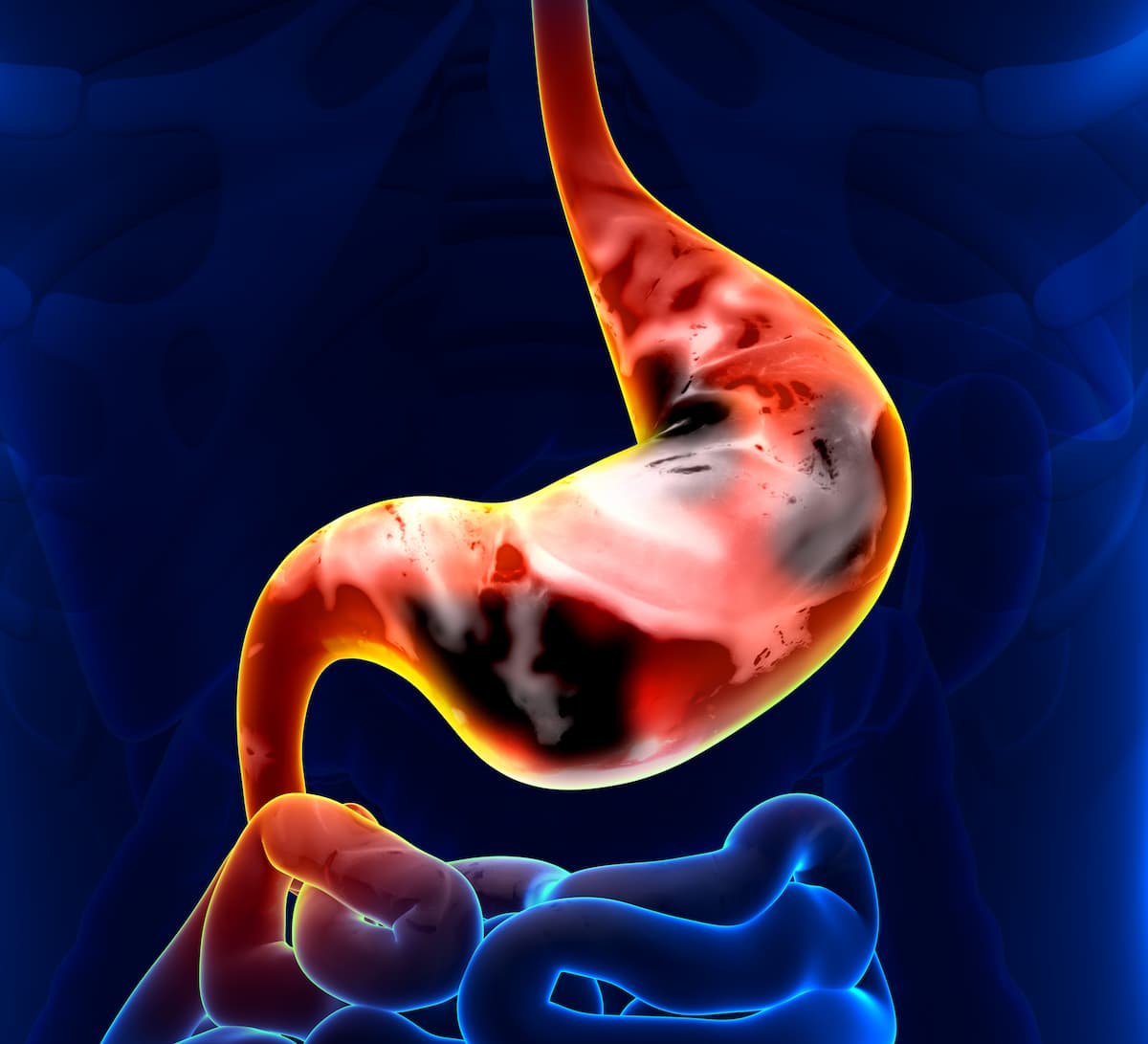
The use of laparoscopic distal gastrectomy (LDG) demonstrated similar short-term outcomes vs open distal gastrectomy (ODG) among patients with clinical T4a gastric cancer, according to findings from the randomized interventional UMC-UPPERGI-01 trial (NCT04384757) published in JAMA Surgery.1
At 30 days, the postoperative morbidity rate was 22.1% with LDG vs 21.2% with ODG (P = .87); most complications were minor and grade 1/2 based on Clavien-Dindo criteria. Major complications of Clavien-Dindo criteria grade 3 or higher occurred in 2.9% vs 3.8% of each cohort (P >.99), postoperative pancreatic fistula (POPF) occurred in 7.7% vs 3.9% (P = .37), intraluminal bleeding occurred in 0% vs 1.9% (P = .50), and intra-abdominal abscess occurred in 2.9% vs 3.8% (P >.99).
In the LDG and ODG groups, respectively, investigators observed nonsignificant differences in the incidence of surgical complications (21.2% vs 16.4%; P = .37) and general complications (3.9% vs 10.6%; P = .11). Two patients (1.9%) in the LDG group required reoperation, including 1 who needed open surgery for a grade C POPF who subsequently died and another patient who had open surgery for refractory intra-abdominal abscess.
Mortality at 30 days occurred in 1 patient (1.0%) in the LDG group compared with 2 (1.9%) in the ODG group (P >.99). The median comprehensive complication index scores for those who experienced any postoperative complications were 12.2 (IQR, 8.7-12.9) in the LDG group and 20.9 (IQR, 8.7-26.2) in the ODG group (P = .09).
“In conclusion, our findings in this noninferiority [randomized clinical trial] demonstrate that LDG is both feasible and safe in the serosa-invasive subgroup when performed by qualified surgeons. This [randomized clinical trial] fulfills a critical evidence gap regarding the application of LDG for locally advanced [gastric cancer] and supports the potential of this approach as an alternative for cT4a [gastric cancer],” lead study author Tran Quang Dat, MD, MSc, from the Department of Gastrointestinal Surgery at University Medical Center of the University of Medicine and Pharmacy at Ho Chi Minh City in Vietnam, wrote with coauthors in the publication.1 “The ongoing follow-up of this trial will determine whether LDG is noninferior to ODG regarding oncological survival, which is necessary for confirming its efficacy in the curative treatment of T4a [gastric cancer].”
In the single-center, open-label UMC-UPPERGI-01 trial, 240 eligible patients with cT4a gastric cancer were randomly assigned 1:1 to undergo LDG (n = 104) or ODG (n = 104). Across both cohorts, investigators completed distal gastrectomy with D2 lymphadenectomy per Japanese Gastric Cancer Treatment Guidelines. Those in the LDG group underwent a total laparoscopic gastrectomy and D2 lymphadenectomy through a predefined stepwise approach designed to ensure consistency and surgical quality. Surgical procedures in the ODG group were comparable to those in the laparoscopic group, although investigators completed surgery in this group via laparotomy.
The trial’s primary end points were 3-year overall survival and relapse-free survival per Kaplan-Meier analysis.2 Secondary end points included operative morbidity, operative time, and resected lymph nodes.
Patients 18 to 80 years old with pathologically confirmed gastric adenocarcinoma and tumors located in the middle or lower third of the stomach were eligible for enrollment on the trial. Having an American Society of Anesthesiologists Physical Status (ASA-PS) of no more than 3 was an additional requirement for study entry.
The mean patient age was 61.1 years in the LDG group and 60.0 years in the ODG group; most patients in each group were male (76.0% vs 72.1%). Additionally, most from each group had an ASA-PS of 3 (53.8% vs 54.8%), an ECOG performance status of 0 (64.4% vs 57.7%), and stage clinically node positive disease (72.1% vs 69.2%).
Data showed no significant differences in the incidence of intraoperative complications between the LDG and ODG groups; the rates of major bleeding were 18.3% vs 14.4% (P = .45), and the rates of vascular injury were 2.9% vs 3.9% (P >.99). A higher proportion of patients in the LDG group underwent reconstruction via Roux-en-Y anastomosis (31.7% vs 11.5%; P = .001).
The mean time to first flatus was 3.0 days in the LDG group vs 3.1 days in the ODG group (P = .95). In each respective group, the mean time to oral diet tolerance was 2.4 days vs 2.8 days (P = .05), the mean length of postoperative hospital stay was 7.4 days vs 7.5 days (P = .13), and the median time from surgery to adjuvant chemotherapy receipt was 33 days (IQR, 31-37.5) vs 34 days (IQR, 31-41).
The presence of a comorbidity was the only factor to independently correlate with the risk of postoperative complications based on multivariate analyses (OR, 2.42; 95% CI, 1.11-5.30; P = .03). The use of LDG vs ODG did not independently predict postoperative morbidity (OR, 0.85; 95% CI, 0.44-1.63; P = .62).
References
- Dat TQ, Thong DQ, Nguyen DT et al. Laparoscopic vs open distal gastrectomy with D2 lymphadenectomy for clinical T4a gastric cancer: the UMC-UPPERGI-01 randomized clinical trial. JAMA Surg. Published online November 12, 2025. doi:10.1001/jamasurg.2025.4929.
- Comparison of open and laparoscopic distal gastrectomy for T4a gastric cancer. ClinicalTrials.gov. Updated June 15, 2025. Accessed December 1, 2025. https://tinyurl.com/4uhcc8xt


