Long-Term Mortality Low Regardless of Treatment in Local Prostate Cancer
Fifteen-year follow-up data suggest the importance of considering the trade-offs between risks and benefits of active monitoring, prostatectomy, and radiotherapy for localized prostate cancer.
Prostate cancer–specific morality was low whether patients received active monitoring, prostatectomy, or radiotherapy for localized prostate cancer, according to 15-year follow-up data from the ProtecT trial (NCT02044172).

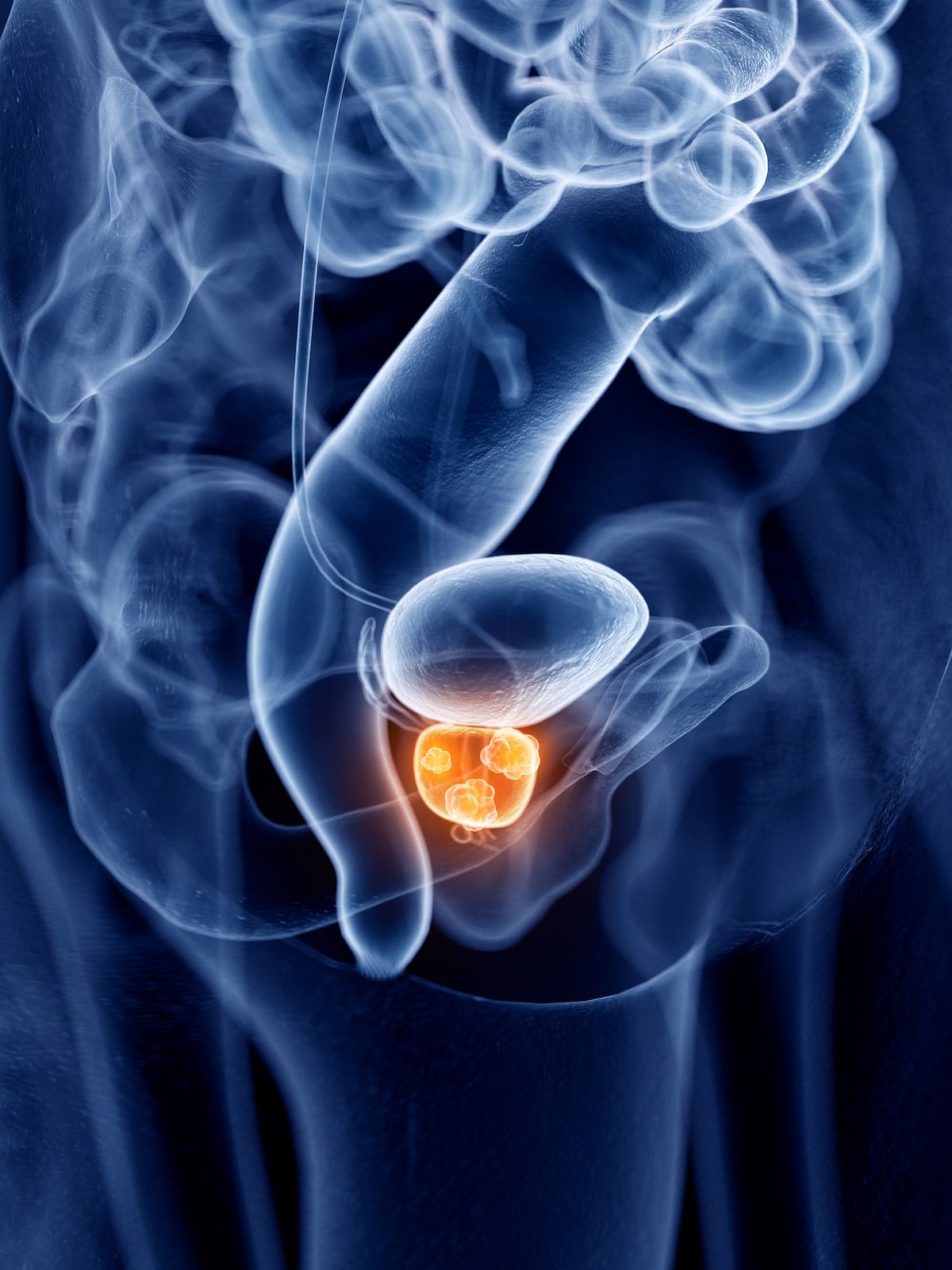
!["Clinicians may avoid overtreatment by ensuring that [patients] with newly diagnosed, localized prostate cancer consider critical trade-offs between short-term and long-term effects of treatments on urinary, bowel, and sexual function, as well as the risks of progression," according to the study authors.](/_next/image?url=https%3A%2F%2Fcdn.sanity.io%2Fimages%2F0vv8moc6%2Fcancernetwork%2F6667f23565d3a551ff1bc0753ff70f9d8abe99bb-1200x1600.jpg%3Ffit%3Dcrop%26auto%3Dformat&w=3840&q=75 "\"Clinicians may avoid overtreatment by ensuring that [patients] with newly diagnosed, localized prostate cancer consider critical trade-offs between short-term and long-term effects of treatments on urinary, bowel, and sexual function, as well as the risks of progression,\" according to the study authors.")
"Clinicians may avoid overtreatment by ensuring that [patients] with newly diagnosed, localized prostate cancer consider critical trade-offs between short-term and long-term effects of treatments on urinary, bowel, and sexual function, as well as the risks of progression," according to the study authors.
Overall, 2.7% of patients died due to prostate cancer, including 3.1% of those in the active-monitoring group, 2.2% in the prostatectomy group, and 2.9% in the radiotherapy group. There was no significant difference in prostate cancer mortality among these groups (P = .53). When investigators elaborated the primary analysis model to compare active monitoring with radiotherapy separately, the resulting estimates favored radiotherapy early but active monitoring later (P = .51).
Death from any cause occurred in 21.7% of patients across the 3 treatment groups. Of these patients, 31.8% of deaths were due to cardiovascular or respiratory disease, and 51.6% died from other cancers.
Investigators observed metastases in 9.4% of patients in the active-monitoring group, 4.7% of the prostatectomy group, and 5.0% of the radiotherapy group. Additionally, 12.7%, 7.2%, and 7.7% of patients in each respective group received long-term androgen deprivation therapy, and 25.9%, 10.5%, and 11.0% of patients developed local progression.
“Our findings indicate that depending on the extent of [adverse] effects associated with early radical treatments, more aggressive therapy can result in more harm than good,” the study authors stated. “Clinicians may avoid overtreatment by ensuring that [patients] with newly diagnosed, localized prostate cancer consider critical trade-offs between short-term and long-term effects of treatments on urinary, bowel, and sexual function, as well as the risks of progression.”
Investigators of the ProtecT trial compared the relative efficacy of active monitoring, prostatectomy, and radiotherapy for patients with localized prostate cancer. In the prostatectomy group, investigators discussed adjuvant or salvage radiotherapy with patients if they had positive surgical margins, extracapsular disease, or a postoperative prostate-specific antigen (PSA) level of 0.2 ng/mL or higher. Patients received radiotherapy at 74 Gy in 37 fractions along with neoadjuvant androgen deprivation therapy for 3 to 6 months.
The primary end point was death from prostate cancer as determined by an independent cause-of-death committee. Secondary end points included death from any cause, metastases, clinical progression, clinical T3 or T4 disease, and initiation of long-term androgen deprivation therapy.
The median 15-year analysis included 545 patients in the active-monitoring group, 553 in the prostatectomy group, and 545 in the radiotherapy group. At baseline, 77.2% of patients were in the Gleason grade group 1, and 76.0% had stage T1c cancer. Risk-stratification indicated that 24.1% of patients had intermediate disease and 9.6% had high-risk disease based on D’Amico criteria along with corresponding values of 26.4% and 2.5% with Cancer of the Prostate Risk Assessment (CAPRA) criteria and 20.5% and 8.8% with Cambridge Prognostic Group criteria, respectively.
Of 488 patients who had undergone prostatectomy after assignment to any group, 138 experienced an increase in the pathological cancer stage to pT3 or pT4, 155 had an increase in tumor grade, and 245 had a Gleason score of 7 or higher. Of 104 patients who developed metastases, 53 had Gleason grade group 1 disease at baseline, and 49 had low-risk disease based on CAPRA criteria.
By the end of the 15-year follow-up, 92.5% of those in the radiotherapy group and 90.4% of those in the prostatectomy group underwent radical treatment compared with 61.1% of those who were given radical treatment in the active-monitoring group. Additionally, 24.4% of patients in the active-monitoring group were alive and did not initiate radical treatment or androgen deprivation therapy. Of these patients, 12.8% had intermediate or high-risk disease per D’Amico criteria, and 10.5% had Gleason grade group 2 disease or higher.
Patients who were under the age of 65 and underwent active monitoring (1.5%) or prostatectomy (1.7%) had a lower risk of death from prostate cancer compared with those receiving radiotherapy (2.9%). Among patients who were 65 years or older, those who had undergone prostatectomy (3.0%) or radiotherapy (2.9%) had a lower risk of death compared with those in the active-monitoring group (5.9%). Investigators observed no evidence that PSA level, clinical stage, Gleason grade group, tumor length, or tumor stratification impacted treatment efficacy across the 3 groups.
Among 40 patients who developed metastatic disease at 10 years, the risk of death was 13.6% for those in the active-monitoring group, 25.0% of the prostatectomy group, and 70.0% of the radiotherapy group.
Reference
Hamdy FC, Donovan JL, Lane JA, et al. Fifteen-year outcomes after monitoring, surgery, or radiotherapy for prostate cancer. N Engl J Med. 2023;388:1547-1558. doi:10.1056/NEJMoa2214122


