Research restores yoga’s role in active therapy
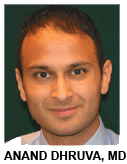
As yoga continues to grow in popularity worldwide, questions regarding its use as a therapeutic modality are becoming increasingly important,” said Dr. Dhruva, who is an assistant clinical professor at the University of California, San Francisco and at the UCSF Osher Center for Integrative Medicine.


Main Article: Yoga fosters sense of well-being in breast ca patients
As yoga continues to grow in popularity worldwide, questions regarding its use as a therapeutic modality are becoming increasingly important,” said Dr. Dhruva, who is an assistant clinical professor at the University of California, San Francisco and at the UCSF Osher Center for Integrative Medicine.
Dr. Danhauer and colleagues conducted a pilot clinical study of a restorative integral yoga intervention among breast cancer patients at various stages of treatment. Strengths of the study include a complete description of the yoga protocol, which is frequently lacking in the yoga literature, and assessments of clinically useful symptom and quality of life endpoints, as well as utilization of a randomized controlled study design.
Weaknesses of the study include lack of an active control group and inclusion of patients at various stages in treatment. The primary objective of the study was to demonstrate feasibility of the intervention in this patient group. About one-third of participants were receiving active therapy during study participation. Adherence data comparing patients who have completed active cancer treatment versus those who are still receiving active cancer treatment are not given.
Based on the data presented in this paper, it’s unclear if this intervention is feasible for breast cancer patients receiving active therapy, which is the cohort of patients for whom such an intervention might be difficult. Integral yoga is ideal for therapeutic use due in part to its emphasis on breathing, mindfulness, and relaxation.
“The yoga research community will look forward to the follow-up study from Dr. Danhauer and colleagues based on the lessons learned from this pilot of integral yoga,” said Dr. Dhruva, who coauthored a chapter on ayurvedic medicine in cancer in Integrative Oncology (Oxford University Press, New York, 2009). “This pilot data offers a valuable contribution to future efforts in developing appropriate study design in yoga research and to the growing body of literature on therapeutic yoga.”


