Adding 177Lu-PNT2002 to SBRT Improves PFS in Oligorecurrent Prostate Cancer
The addition of 177Lu-PNT2002 did not significantly increase toxicity in patients with oligorecurrent prostate cancer who received SBRT.


The addition of 177Lu-PNT2002 did not significantly increase toxicity in patients with oligorecurrent prostate cancer who received SBRT.
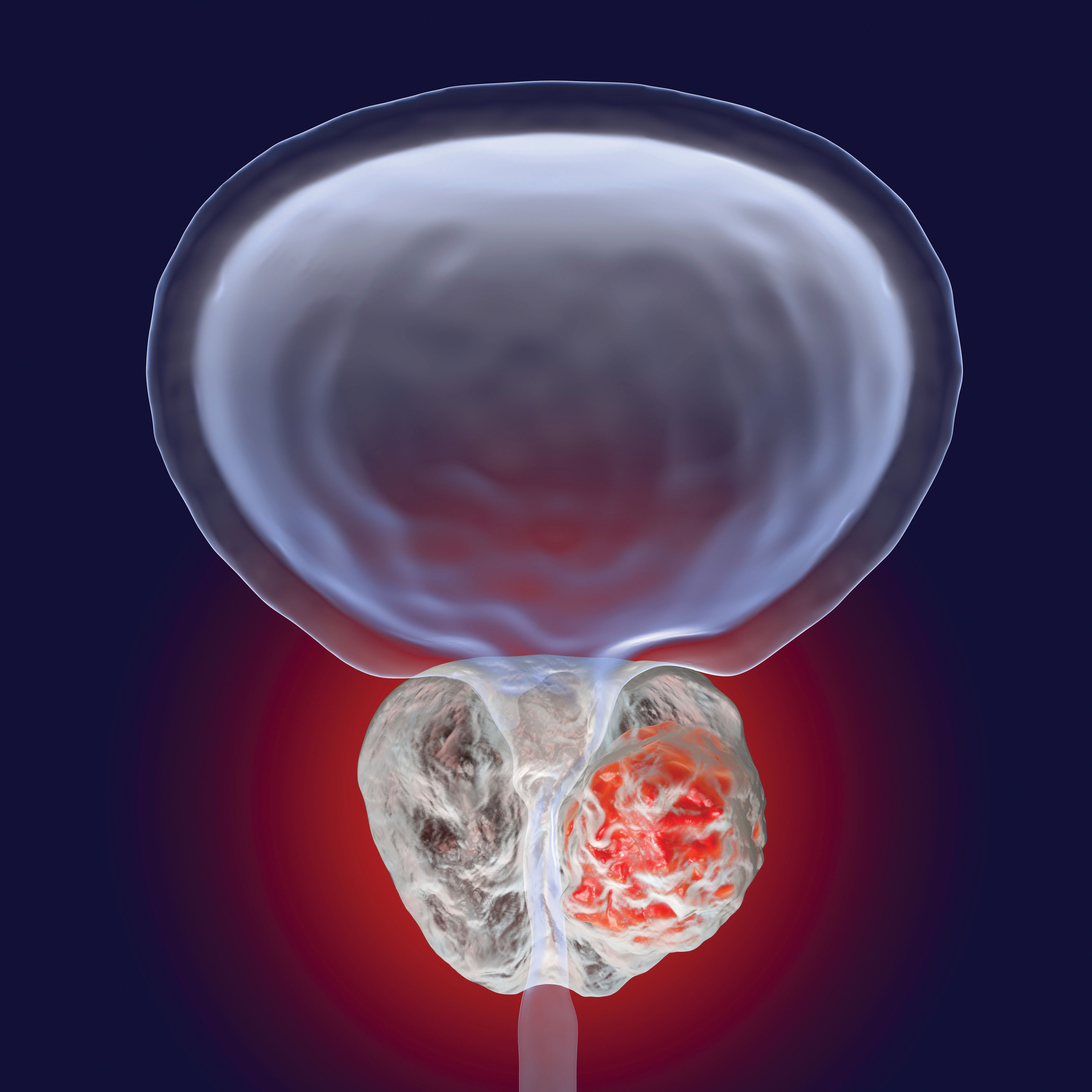
The primary end point analysis of the phase 2 LUNAR trial (NCT05496959) presented at the 2025 American Society for Radiation Oncology Annual Meeting showed that adding 2 cycles of lutetium 177 (177Lu)-PNT2002 to stereotactic body radiotherapy (SBRT) significantly improved progression-free survival (PFS) in patients with oligorecurrent prostate cancer.
The median PFS increased from 7.4 months (95% CI, 6.0-13.5) with SBRT alone to 17.6 months (95% CI, 15.0-not reached [NR]) when 177Lu-PNT2002 was added to SBRT (HR, 0.37; 95% CI, 0.22-0.61; P < .0001). In-field progressions were reported in 2 of 91 lesions (2%) in the SBRT arm and 0 of 96 lesions (0%) in the 177Lu-PNT2002 plus SBRT arm; 64 of 65 (98%) progression events corresponded to new lesions.
It was noted that PFS was calculated using prostate-specific membrane antigen (PSMA) PET/CT–based progression, which may not have the prognostic impact of progression on conventional imaging.
The median hormonal therapy–free survival was 14.2 months (95% CI, 10.1-NR) with SBRT alone compared with 24.3 months (95% CI, 18.0-NR) with 177Lu-PNT2002 plus SBRT (HR, 0.40; 95% CI, 0.22-0.71; P < .0001). New lesions on PSMA PET/CT were observed in 46 of 47 (98%) patients who received salvage hormonal therapy. Further, 17 of 64 (27%) of patients with new lesions received metastasis-directed therapy without hormonal therapy.
“Adding 2 cycles of 177Lu-PNT2002 to SBRT significantly improved PFS in men with oligorecurrent prostate cancer, presumably by action against occult metastatic disease, without attendant increase in toxicity,” said presenting study author Amar Kishan, MD, professor and executive vice chair for the Department of Radiation Oncology at the David Geffen School of Medicine at UCLA and the UCLA Jonsson Comprehensive Cancer Center in Los Angeles, California. “Increased [T-cell receptor] abundance was prognostic in both arms, and a biomarker based on germline variants in genes largely related to immune response and DNA repair was identified.”
A total of 92 patients with 1 to 5 lesions outside of the prostate or prostate bed on PSMA PET/CT were randomly assigned, in a 1:1 ratio, to receive SBRT alone or with 177Lu-PNT2002. Random assignment was stratified by stage N1/M1a vs M1b and 1 lesion vs 2 to 3 lesions vs 4 to 5 lesions. In the combination group, patients were given 2 cycles of 6.8 GBq (± 10%) of intravenous 177Lu-PNT2002, with each cycle 8 weeks apart, then PSMA PET/CT imaging 4 to 6 weeks after the second cycle, and finally SBRT to all sites of PSMA PET/CT–defined disease. In both groups, SBRT administration was the same.
The trial was conducted to test the hypothesis that adding PSMA-based radioligand therapy with 177Lu-PNT2002 to metastasis-directed SBRT would prolong PFS by acting on occult, microscopic disease in patients with oligorecurrent prostate cancer.
Although metastasis-directed therapy has shown it may be a tool for prolonging PFS in other research, progression does still occur in most patients.
Regarding safety, no significant increases in adverse effects were observed with 177Lu-PNT2002. Grade 1 anemia occurred in 31.1% of the combination group and 21.4% of the SBRT-alone group (P = .03); grade 1 lymphopenia occurred in 31.1% and 14.3%, respectively; grade 1 fatigue occurred in 64.3% and 76.5%; and grade 1 nausea occurred in 8.9% and 14.3%.
“Further optimization of [radioligand therapy] is likely possible, given that 64% of patients on the 177Lu-PNT2002 plus SBRT arm still progressed,” the authors concluded.
Disclaimers: Kishan reported honoraria/consulting fees/advisory board roles for Accuray, Boston Scientific, Lantheus, Novartis, and Varian Medical Systems and research funding from the Department of Defense, Janssen, Lantheus, National Institutes of Health, POINT Biopharma, Varian Medical Systems, and ViewRay Systems.
Reference
Kishan AU, Valle L, Wilhalme H, et al. 177Lutetium-PSMA neoadjuvant to ablative radiotherapy for oligorecurrent prostate cancer: primary endpoint analysis of the phase II LUNAR randomized trial. Abstract presented at: 2025 American Society for Radiation Oncology Annual Meeting; September 27-October 1, 2025; San Francisco, CA. Abstract 3.


